Holocaust Memorial Day

imgres-1Viktor Frankl is the only man I know who voluntarily entered the concentration camps.

I met Viktor in April of l985.  He became a friend and mentor who had a profound influence on my life.  Once in a quiet moment, he told me how he found his path, how he came to be in the concentration camps, and the value of that “abyss experience.”

“When the Nazis came to power,” he said, “I was the head of the neurological department of a Jewish hospital in Vienna. Anti-Semitism was increasing daily, and my family and I could see what was coming. Like many people, we began preparing to get out. I applied for a visa to come to America where I could continue my work.

“At the eleventh hour, as the Nazis were closing in, the U.S. Consulate informed me a visa had been granted for me to emigrate to the United States. This was the moment I had anticipated for several years and I rushed down to the consulate with great excitement. My enthusiasm fled when I realized the visa was only valid for one. I was confronted by the fact that if I escaped to America, I would have to leave my parents behind.”

In despair Viktor left the embassy and walked in a daze to a park nearby. Covering the yellow Star of David he was compelled to wear on his chest so the Nazis would leave him alone, he sat on the park bench in agony. What should he do?

“On one hand,” he said, “was safety, the opportunity to work, and nurture my ‘brain child’ — logotherapy. On the other hand, there was the responsibility to take care of my parents by staying with them in Vienna and, rather than leaving them to their fate, share it with them.”

Viktor could not find an answer. What would his parents do if he left? What could he do if he stayed? Would it make any difference to them or would all be lost?

“At best, if I stayed with my family, I would have the opportunity to be with them and protect them from being deported but who knew for how long before the Gestapo came for us all?” Viktor said. “If I stayed, my work and theories would perish with me.”

Viktor sat there and meditated for more than an hour. Finally, he realized he could not resolve the matter and got up to go home. He remembers thinking somewhat sarcastically as he left that if there ever was a time that a man could use a sign from God, this would be it. The issue was beyond human resolution.

Almost immediately upon entering his apartment, Frankl noticed a stone, a piece of marble on the radio. He called his father and asked him, “What is this and why is it here?

“Oh, Viktor,” his father said with some excitement. “I forgot to tell you. I picked it up this morning on the site where the largest synagogue in Vienna stood before the Nazis burned it down.”

“And why did you bring it home?” Viktor asked.

“Because I noticed that it is part of the two tablets whereon the Ten Commandments are engraved – you remember, above the altar?” his father said.  “In fact, you can see, on the piece of marble, one single Hebrew letter engraved and gilded.  Even more, I can tell to which of the Ten Commandments this letter refers because it serves as the abbreviation for only one.”

“I looked at it and had my answer,” Viktor said. “It was the commandment that says, ‘Honor thy father and thy mother.’ At that moment, my decision was clear. I gave up my visa and stayed in Austria. A few months later, the Gestapo closed the hospital. My whole family was arrested and taken to the concentration camps. My mother died in the gas chamber of Auschwitz. My brother died in a coal mine near Auschwitz. My father suffered first from starvation and finally succumbed to pneumonia.”

The only satisfaction in this was that Viktor was able to visit his father in his barracks and be with him in his final hours. As a physician, he could not help but notice the terminal lung edema setting in. He saw his father in pain. He heard his struggle for breath and knew when it was time to use the single ampoule of morphine he had smuggled into camp.

Viktor waited and watched until the morphine worked.  When it brought relief he asked his father if there was anything more he could do for him. They talked for a moment more, and then his father fell peacefully into the sleep Viktor knew would be followed by death.

As he left for his own barracks, Viktor said he knew he would never see his father again, but rather than sadness, he found himself experiencing happiness to a degree he had never known before.  There in the concentration camps, the most miserable of experiences, he found his greatest joy. He had honored his father. He had been there for him and stayed with him to the last and as a result had been able to ease his father’s pain.

At the same time, in ways he could not have anticipated, the decision to enter the concentration camp advanced his career and established the credibility of his work. For it was there that Frank found the laboratory to test and prove his theories.  Freud believed that if you subject the mass of humanity to deprivation, human differences would be minimized and man would be reduced to fundamental desires, animal instincts, and a single-minded pursuit of survival at all cost.

“But Freud was spared to get to know the concentration camps,” Viktor observed. “We who were there saw not the uniformity he predicted. People became ever more different when confronted by such a tragic situation. They unmasked their real selves — both the swine and the saint.

“In truth, I found it is the orientation toward a meaning to fulfill in the future – after liberation – that more than any other factor gave people the greatest chance to survive even this abyss experience. It is evidence of what I have come to call the self-transcendent quality of a human being – that is, a truly human being is never primarily or basically concerned with himself or herself, or anything within himself or herself; but rather is reaching out of themselves, into the world, toward a meaning to fulfill or another human being to love.”
Posted in Inspiration | 1 Comment

Operation Babylift: The Story Behind the Story

imgresIt’s the stuff of legends.

A plane takes off from Tan Son Nhat Airport at 4:00 PM on April 4, l975.  It’s less than a month before Saigon will fall.  North Vietnamese troops are rapidly advancing.  Desperate people are pouring out of the country, fearing for their lives.

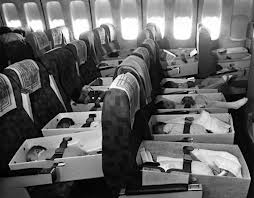
The plane is a C5A Galaxy – a cargo plane. There are 243 children on board, along with their escorts and Air Force personnel.  It’s the first plane in Operation Babylift, organized to bring orphans of the war to the United States.  A row of cardboard boxes runs down the center of the plane.  Each two-foot square box contains two or three infants.  Toddlers and older children line the sides of the plane, sitting on hard aluminum benches.

Twelve minutes out of Saigon an explosion tears the fuselage apart.   Cables are severed.  Control is lost.   Decompression fills the plane with fog and debris.

Somehow, the pilot turns the plane around and heads for Saigon.  Halfway back it’s clear they won’t make it.

The pilot does the only thing he can and brings the nose up, making the plane belly flop into a rice paddy.  It skids a quarter of a mile and then becomes airborne again, skimming the surface of the ground until it hits a dike half a mile away and breaks apart.

One hundred and thirty-eight people are killed instantly, including 78 children.  One hundred and sixty-five children survive – many of them critically injured and desperately in need of medical attention.

Half a world away one man hears what happened and decides he has to do something about it.  He is not about to wait the ten days the government says it will take to mount a relief effort.

The man is Bob Macauley.  He loves children, hates bureaucracy, and believes nothing is impossible.  He is driven by the terrible urgency of “now.”  In an instant, Macauley decides to rescue the kids and begins by calling every airline in the phone book.  All he needs is one willing to charter a plane to Saigon.

Pan Am is at the bottom of the list and as it happens they have a Boeing 747 in Guam.  “Yes, we can send it to Saigon,” they say – it’s the first ‘yes’ Bob has heard – “but we will have to pull it out of a commercial run.”

This is Pan Am’s way of saying they can do it but the cost will be steep.  They want a quarter of a million dollars, ten percent down, and the balance on arrival in San Francisco.

Bob tells them to put the plane in the air and he will put the check in the mail.   He doesn’t bother telling them he doesn’t have a quarter of million dollars.  He doesn’t bother to tell them he doesn’t even have enough to cover the deposit.  Still, he keeps his word and sends Pan Am the check he promised.

“This all happened on a Friday,” he would later explain.  “By the time Pan Am got the check, I knew it would be Monday.  I figured the kids would be safe by then.  We could worry about the rest later.”

Sure enough, on Sunday morning Pan Am calls Bob to say the plane is on its way.  They want the balance.  Bob cheerfully writes them another check and sends it bouncing along.  By the time a somewhat agitated Pan Am employee calls to find out what is going on, he has taken out a second mortgage on his house to make good his debt and cover the cost of his mercy flight.

The story behind the story is Bob’s wife’s response.  The first Leila heard what Bob had done was when the TV crews parked on the front lawn and started taking pictures of her house.  When the reporters told her what happened and asked her what she thought of all this, she said, “It sounds like a pretty good deal to me.  Bob gets the kids and the bank gets the house.”

How many women would respond like that?  How many people would do what Bob did?  How is it possible?

They would say it’s pretty simple.  If you know what your values are all your other decisions are easier.


Posted in Inspiration | 3 Comments

Einstein’s Greatest Discovery

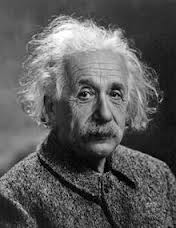
imgresNear the end of his life, Albert Einstein -born 134 years ago today – was interviewed by the editor of a scientific publication.  The interview ranged across the breadth of Einstein’s life and work.  As they were wrapping up, the interviewer said he had one final question.

“Why are we here?”  he asked.

When Einstein did not immediately reply, the interviewer became embarrassed and apologized for asking something so difficult.

Einstein smiled gently.

“If I looked puzzled,” he said, “it is because you asked me something so simple.  We are here to serve one another.”

From this fundamental truth, reflected in differing ways of saying the same thing – see Truett Cathy below – flows man’s mission statement.  Everything we do that matters is done in response to this central law of life.  Everything that lasts is created out of the love and concern of one human being for another.

Contrary to popular opinion, the secret to success in life has more to do with our hearts than our heads.  What makes us different is not our ability to think but our ability to love.

Posted in Inspiration | 2 Comments

Truett Cathy

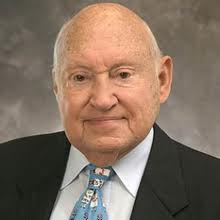
imgresIf you don’t know Truett Cathy, you probably know Chick-fil-A.   If you know Chick-fil-A, you know they have the best the chicken sandwich around and the best service of any fast food restaurant in the country.  You may also know Chick-fil-A is closed on Sunday.   You might not know this all comes from Truett Cathy and the way he has his shaped his company to reflect his personal values.

Truett will be 92 on the 14th of March.  He started in business at the age of eight selling Coca-Cola door to door for a nickel a bottle.  He is now worth upwards of $4 billion.  But what makes Truett’s story truly remarkable is not how much money he has made but how he managed to became so successful.

“We had a corporate retreat a few years ago,” he told me when we met, “and we asked ourselves:  Why are we in business?  Why are we alive?  What is the purpose of living anyway?”

After days of discussion, Truett and his team came up with a statement of corporate purpose that still guides Chick-fil-A today:  “To glorify God by being a faithful steward of all that is entrusted to our care and to have a positive influence on all the people with whom we come in contact.”

That is an unusual statement for any corporation to make, but even more so when you consider the nature of Chick-fil-A’s business.

“Whether we know it or not, we influence everyone we associate with in a positive or negative way,” Truett explained.  “The ability to influence another person by what we do is one of the greatest gifts God has given us.”

“I say to my wife oftentimes, we are not in the chicken business, we are in the people business.  You cannot be a success in life unless you develop a heart for other people.  It is each and every one of our responsibilities to use what resources we have to help other people.”

Like Truett, are all in the people business.  No individual stands alone, complete, distinct, and unadorned.  Others act upon us as we act on upon them.  We shape the direction of each other’s lives much as the wind affects the tree’s design.  You can see even the slightest breeze captured in the movement of the leaves, but it is only with the passage of time that we see how the tree has been inclined.

Posted in Inspiration | 1 Comment

Henri and the Holocaust: Light Out Darkness

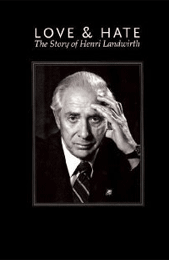
love-hate-coverHenri Landwirth is about to celebrate his 87th birthday.  It’s safe to say he beat the odds.

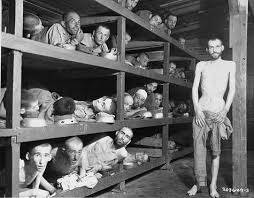
At the age of 13, Henri was sent to Plaszow, his first concentration camp.  Over the next five years he went from Plaszow to Random, Random to Auschwitz, Auschwitz to Mauthausen, Mauthausen to Flossenberg, and Flossenberg to Mittelbau.  Each camp was progressively worse than the last; each camp was more lethal.

Viktor Frankl said he calculated the odds of survival in Auschwitz at 1 in 29 and that Auschwitz was pleasant compared to Mauthausen. Mauthausen was a death camp.  When Henri arrived there, the average survival period was four months.  Mittelbau was even worse.  Two thousand people went to Mittelbau with Henri.  Less than 300 survived.

Small wonder Henri has always felt he lives on borrowed time.  But the fact that Henri survived is less remarkable to me than the way he has chosen to live his life.

Henri lived in the closest thing to hell man can contrive.  He saw humanity at its worst.   He has answered by embodying the best.  Where there is abundant reason for anger, hate, and bitterness, there is only love, joy, and  forgiveness.

When I met him 25 years ago, I couldn’t help wondering how this was possible, particularly how he could forgive those who had imprisoned him, starved and abused him, and killed his mother and father.  I learned it started like every journey with a single step, a decision that changed the direction of his life.

When the war ended, Henri was nineteen.  He said he was consumed by hate.   He wanted the Germans to suffer the way they had made him suffer.  He did everything he could to make sure they did.

“When they begged me for mercy,” Henri said, “I didn’t hear them.  I thought of my mother and father and I didn’t hear them at all.”

Then came the morning he met a German boy walking near a stream between two towns.  He was about the same age as Henri had been when he was taken to Plaszow.  The boy was dressed in the uniform of the Hitler Jurgen, Hitler’s youth organization.

Henri still remembers the way his blood boiled.  He remembers blocking the boy’s way and asking him if he was a good Hitler Jurgen.  Henri remembers the fear in boy’s eyes.

“I wanted to hurt him,” Henri says.  “I wanted to do to him what they had done me.  I told him to take off his clothes or I was going to kill him.”

The boy did as he was told and stood naked before his tormentor, as Henri had done so many times before, shivering and afraid in the face of unreasoning hate.  As Henri looked at the boy, the rage he had been carrying crested.

“I grabbed the boy by the neck,” Henri recalls, “and thought I would strangle him with my bare hands.”

Then from deep inside came a quiet thought.  He did not want to be like them.

“I did not want to become what I despised,” Henri says.  “Anything would be better than turning into one of them.”

Slowly, the rage subsided.   When he caught his breath, he released the boy and told him to run.  It would be many years before he could say he forgave the Germans, but he had turned compassion’s corner.  The healing had begun.

Posted in Inspiration | 3 Comments