Don’t Chase Anything You Don’t Want To Catch

imagesMany people, myself included, have pursued happiness and pleasure in places where we know it will not be found.  It is tempting to seek the comfort of material things and indulge yourself, pursue appetites and the satisfactions of the flesh.

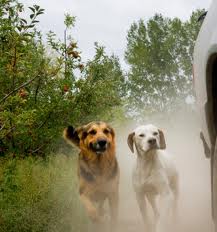
When I was young, my mother watched my pursuit of pleasure with sadness at the thought that I could be so consumed by such superficial interests.  While I always suspected her displeasure, nothing was said until she found the proper occasion – a neighbor’s dog injured while chasing a car.

When I commented on this sad incident, my mother took the opportunity.   “Let that be a lesson to you,” she said.  “Don’t chase anything you don’t want to catch.”

Her comment gave me pause – then and now.  If you think about it, it has a broad as well as a specific application.  It makes you question your priorities and the way you spend your time.

What do you chase and why?  Is what you are chasing – the object of your activities and desires – something you really want, something worth keeping?

Who among us would prefer a series of superficial relationships to true love?  Who would want great wealth if it came with the condition it could not be shared?  Would anyone knowingly choose a life of ease and comfort over a life of meaning and purpose?  If not, why do we do so much of what we do?

“If any organism fails to fulfill its potentialities, it becomes sick,” Rollo May observed, “just as your legs would wither if you never walked.”  Much of this sickness is evident in the world despite our attempts to camouflage our failings with the pursuit of meaningless things.

The greatest regret we can have is not that our lives shall come to an end, but rather that it shall never have a beginning.  To be what we are, and to become what are capable of becoming, is the noblest end in life.  Our duty is to become useful, not according to our desires but according to our powers.
Posted in Inspiration | 4 Comments

Hard Times

images-4Becky Simpson remembers watching her little brother die of pneumonia when she was five.  Two years later her sister almost followed him.  The house was so cold, she recalls, it was warmer outside.  She also remembers making, at that tender age, a promise that she would never ever watch someone die without trying to help.

Ten years after their marriage, her husband, Bobby, lost his sight and could no longer and work.  Hard times got harder.

“We nearly starved to death,” Bobby remembers.  “What we had to live on was what we raised ourselves – garden stuff.”

What saved them was an even bigger catastrophe.  One summer, when it seemed things couldn’t get much worse, the skies opened up.  It rained seemingly without end for days and their valley was hit with a series of floods.  The damage done by the deluge was complicated by the ecological damage caused by strip mining in the mountains above them.  Soon, there wasn’t a bridge left in the county.

The way Bobby remembers it, “There were maybe three good cars left in the whole valley.  We lost all of our wells and the water in our house was four feet deep.”

What Becky remembers is the hopelessness of standing on a crate near the bank of the river crying in frustration the third time her brother was flooded out.  While she cried, she remembered her promise to herself and in the back of her mind a thought formed.  What came to her was the knowledge that she had friends she hadn’t met yet.

Acting on that thought, Becky got on the phone and got to work.  She organized, cajoled and testified.  She arranged meetings, put together petitions, and testified at hearings.  Before she was done, she had obtained a million dollars to dredge the silt out of the creek.  Then she went to work looking for money for reclamation of the mountains.  Surprising even herself, she was able to raise $940,000 to stabilize the mountains and restore their ecological base.

From that success and her new understanding emerged the purpose and direction of her life.  Though they live on nothing more than Bobby’s disability pay, the Simpsons founded the Cranks Creek Survival Center, which sees to those in need in a dozen counties in the tri-state area of Kentucky, Virginia, and Tennessee.

“Human suffering has always moved me,” Becky said, “but I had no idea that any one person could really do anything about it.”

Becky and Bobby do whatever needs to be done.  Thousands of volunteers – Becky’s unknown friends – have come to help.  They have come from the entire east coast and more than a dozen foreign nations, including India, China, Africa, and Brazil.   It is a testimony to the depth of poverty in Appalachia that residents of countries we tend to think of as poor have traveled halfway around the world to aid Americans who are even poorer.

Bobby supervises their building projects and directs the gathering of supplies.  Though sightless, he has learned the highways by heart, navigating his driver with a collection of audio and visual cues he has stored up in his mind.

“A lot of handicapped people just sit down and don’t try to do nothing,” he explains, “but there is always something you can do if you try.”

“Somebody once said it was my work,” Becky concludes.  “I said, no, it ain’t my work.  It’s my life.  I had a dream since I was a child that someday I was going to help needy people and now I can do it.  It has to be a miracle.  That’s the only way I can explain it.

Everyone is needed.  As the Simpsons demonstrate, everyone can contribute.  No one needs to wait a single moment before starting to improve the world.

Posted in Inspiration | 2 Comments

The Power of “Yes”

ahI was late to marry.  As soon as I approached puberty, my father began drumming into me the notion that marriage was most important decision of my life.  He told me to wait until I finished my education and warned me not to pick the wrong woman for the wrong reason.

He said I should find a good woman and suggested I look in the churches rather than in the clubs and bars.  My sense of humor was such that I told him I would do as he said and wait for them outside the confession booth – the theory being the longer they were in there the more likely they were to be worth waiting for.

My mother advised me to follow my heart.  She said I would know when I found the right person.  When I asked her how I would know, she always had the same infuriating response – “You’ll just know.”

As a result, I thought long and hard about marriage and the kind of person I wanted to share my life.  In law school, I even went so far as to make a list on a legal pad of all the attributes I wanted.  I compared every woman I met to that ideal.

Through the years, I found a number of women who met all my criteria.  They had all the qualities I thought I was looking for – and more.  I couldn’t find fault with them; still, something held me back.  It just didn’t feel right.

My friends – many of them married for years – watched from the sidelines with amusement.  Some, like Henri Landwirth, doubted I would ever marry.  Finally, he was bold enough to press the issue.

“Stop all this running around,” Henri said, “and just pick one.  It doesn’t matter whether it is this one or that one.  Just pick one and get it over with.  Pretty soon no one will have you.”

When I told him I had no intention of marrying until I was sure I had found the right person, he laughed and told me to stop kidding myself.  “You don’t even know what you are looking for,” he said.

When I said I did and began to describe the woman I hoped to find, Henri stopped short.  Something I said brought to mind a girl who worked with him at Give Kids the World.  It was one of the few times I have seen Henri at a loss for words.

Henri made the connection a month later.  He asked her to pick me up from the airport in Orlando the next time and I came to visit him and gave her $20 to buy me a drink.

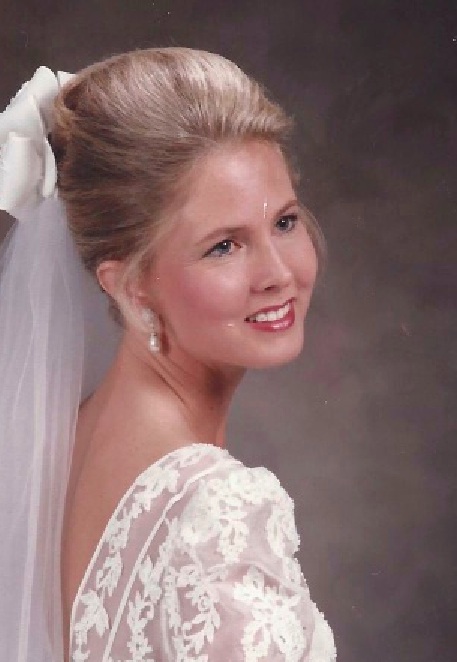
One drink was all it took.  The connection was natural and immediate.  Neither one of us said anything about it for a while, but we both knew we were meant to be together.

When Angie accepted my proposal, twenty-one years ago today, I called Senator Moss to tell him the news.  Senator Moss was responsible for bringing me to Washington and through the years had become a friend, mentor, and second father.  I told him how wonderful she was and began listing her many attributes.  When I took a breath, he reminded me he had met her once.

“You know the package isn’t bad either,” he said.  He was in his eighties by then but there was nothing wrong with his eyesight.

They were all right – my mother and father, Henri and Senator Moss.  My life changed when she said, “Yes.”  Asking her to marry me was the best decision I have ever made.

Posted in Inspiration | 12 Comments

If You Lead, Others Will Follow

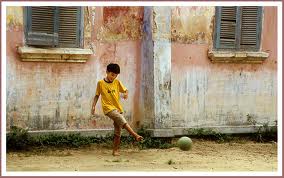
images-2When you are a boy playing soccer, probably the last thing you are thinking about is being safe.  For twelve-year-old Sead Bekric it nearly was when artillery shells blew up the ground beneath his feet in Bosnia.

The last memory Sead has before the darkness closed his eyes was watching a friend’s head being blown off.   He has no memory of the shrapnel that struck his eyes or the helicopter that would later come to fly him to Tuzla.

All he remembers is the pain.  He screamed in agony, seemingly forever, until he heard his younger brother’s voice.  Summing up his courage, he said, “I’m all right.  Don’t be afraid.”

A CNN crew passing by caught this touching exchange.  Within hours the image of this brave blind boy was broadcast around the world.  Millions of people saw the story.  Many undoubtedly wished they could do something to help.

One man did.

Bob Macauley, founder of AmeriCares, was watching from his office in Connecticut.  He told his assistant, Terry Tarnowski, “Let’s go get him.”

“Most of us can be terribly moved by something and even say within ourselves – ‘Oh, I wish I could do something.’  Bob never stopped there,” Terry recalls.  “With Bob that was just the beginning. The desire was just the first step and for him it was never a big step.   For Bob, it was as simple as I want to respond.  I will respond.  The best way to respond was the next step.”

At that time, Tuzla airport was not open for humanitarian relief flights, but somehow Bob persuaded the UN to let AmeriCares land long enough to collect the boy and bring him out.  Less than 24 hours after the boy lost his sight, a rescue team was en route.

The trip was harrowing.  Going in, the helicopter had to refuel at Split before the final leg to Tuzla.  Fighting was so fierce, the helicopter had to touch down, gas up, and leave in less than ten minutes; but two hours later, they were in Tuzla.

Sead lost his sight on Monday.  By Friday of the same week, he was in California being treated by the Jules Stein Eye Institute.

“It seems your approach is total commitment,” I told Bob when I heard this story.  “You decided you were going to get this kid one way or another and just went for it.”

“That’s right,” Bob said.  “If you know what the right thing to do is you just do it.  And if you explain to people what you are trying to do, they will want to help.  People love to get aboard.  They get a lot of satisfaction out of being part of it.  In Saed’s case, when we got him to the Netherlands the people at KLM had all seen his picture and wanted to help.  They put him on a plane and flew him to LA free of charge.”

“When you see an opportunity like that, go for it.  Don’t weigh it back and forth, up and down, or go half way.   Don’t think of all the reasons why it won’t work, or second-guess yourself.  Just do it.  Make your mind up you are going to go and go.”

“If you are doing it for someone else, that’s almost a guarantee of success.  If you are doing it for yourself, that’s almost always a guarantee of failure.  If you don’t go for it when the window is open, it will never open again.  If you lead, others will follow.”

(Taken from “His Name Is Today,” the story of Bob Macauley)

Posted in Inspiration | 1 Comment

A Life of Love

images-2A few years ago, I visited San Francisco for a board meeting of the Jane Goodall Institute. Though I arrived late in the day, I was determined to get out of the hotel and enjoy the city.

As I began to walk around, I was surprised by how much things seemed to have changed.  The area around my hotel felt uncomfortable.  Many of the people on the street seemed somewhat seedy.  The few shops that were open were the kind of shops most communities try to close.

Still, my parents were married on O’Farrell Street a few blocks away.  I was determined to visit the site and began walking in that direction.  As I waited for a light at the first major intersection, I saw a derelict coming toward me.  He was dirty and drunk and disheveled.  His hair was long and unkempt.  His face and clothes were covered with filth.

As he staggered across the street, a gang of rowdy young people entered the intersection from the crossing street.  They were loud and obnoxious, clearly out for a night on the town.  They took great delight in ridiculing the drunken man as he approached.

Their amusement reached a crescendo when the derelict stopped in the middle of the street, dropped his pants, and began to urinate.  He stood there for a moment, wavering and fighting for balance until the booze got the better of him.

He fell and lay there in the intersection, exposed to the world and in obvious confusion.  I watched in shock and consternation.  The gang of teens ran to his assistance, helping him to his feet, pulling his pants up, and seeing him safely across the street.

It’s been five years, but this incident is still fresh in my mind.  I don’t know which I regret more – that I was not the one to help or that I so badly misjudged those who did.

Each day we meet indifference, ingratitude, disloyalty, dishonesty, greed, ill will, and selfishness.  A life of love requires we answer with honesty, integrity, empathy, good will, and selflessness.  A life of love asks us to listen with our hearts, act with compassion for all living things, and live a life of limited regrets.

Posted in Inspiration | 1 Comment