
Independence Day

searchMost of us are descendants of people who have come to America from some other place. Many endured great hardships to do so, leaving everything familiar behind, taking with them only the clothes on their backs, a few meager belongings and their hopes and dreams.

You have to wonder – what is so compelling?

Patrick Henry said it was the greatest of all earthly blessings – liberty, which John Adams defined “as to be the power to do as we would be done by.”

In paraphrasing the Golden Rule to define liberty, Adams makes a fundamental point. Ours is the first society to define itself in terms of both spirituality and human liberty.

De Tocqueville said it this way:

“The American character is the result of two distinct elements, which in other places have been in frequent hostility, but which in America have been admirably incorporated and combined with one another. I allude to the spirit of religion and the spirit of Liberty. Religion never more surely establishes its empire than when it reigns in the hearts of men unsupported by aught beside its native strength. Liberty regards religion as its companion in all its battles and its triumphs – as the cradle of its infancy, and the divine source of its claims. It considers religion as the safeguard of morality, and morality as the best security of law and the surest pledge of the duration of freedom.”

The same understanding led Thomas Jefferson to say, “If there ever was a holy war, it was the one that saved our liberties and gave us independence,” and justified Benjamin Franklin’s claim, “Our cause is the cause of all mankind.”

Liberty is not just an idea, an abstract principle.  Liberty is power – the power to do specific things, the power of acting.  Therein lies much of the secret of America’s success. The more liberty a nation can claim, the more powerful it becomes.

“Our reliance is in the love of liberty which God has planted in us,” President Lincoln said.  “Our defense is in the spirit which primed liberty as the heritage of all men, in all lands everywhere. Destroy this spirit and you have planted the seeds of despotism at your door.”

The spirit of liberty is the key. Judge Learned Hand said it this way:

“The spirit of liberty is the spirit which is not too sure that it is right; the spirit of liberty is the spirit which seeks to understand the minds of other man and women; the spirit of liberty is the spirit which weighs their interest alongside its own without bias; the spirit of liberty remembers that not even a sparrow falls to earth unheeded; the spirit of liberty is the spirit of Him, who, near two thousand years ago, taught mankind that lesson it has never learned, but has never quite forgotten: that there is a kingdom where the least shall be heard and considered side by side with the greatest.”

It is that spirit we celebrate today. Happy Independence Day!

Posted in Inspiration | 3 Comments

Martin Luther King, Donald Sterling, and the Washington Redskins

imgresI was working at the Senate when Martin Luther King was killed. The day after his assassination I heard a United States Senator say, “It’s about time someone killed that son-of-a bitch.”

This remark was made in a public place. There were dozens of people around. There were a couple of startled expressions but no one said a word.

This Senator went on to be re-elected repeatedly. They named roads and buildings after him. Near the end of his career the entire Senate turned out to honor him at a dinner in the Capitol where people who should have known better hailed him as one of the Senate’s icons.

In contrast, Donald Sterling’s remarks were made in private. When they were publicized the public’s outrage was immediate and overwhelming. The message was clear and undeniable: Times have changed. We are not going to tolerate this kind of behavior any more.

Daniel Snyder would do well to take note. He has steadfastly ignored the growing chorus of Native Americans, journalists, public officials, and activists who find the word “Redskins” offensive.

In his defense, Snyder didn’t name the team. It was part of the equity he purchased in 1999. Plus, it is of value not only to him, but also to others in the NFL who share in pooled royalties from merchandise and broadcasting. A name change would clearly have broad and significant financial implications.

Understandable as this may be, the simple truth is that this issue isn’t going away and can’t be papered over.  Times have changed and the tide is running against the Old Guard.  Our society increasingly has little tolerance for racism, sexism, and all the other ‘isms’ that keep us separate and apart.

It is part of our quest to form “a more perfect union” and a reflection of a growing awareness that our seemingly independent lives are rooted together beneath the surface and tied to a common source. We cannot diminish others without diminishing ourselves.

The name “Washington Redskins” may be historical, but it is on the wrong side of history. It’s time to let it go and move on.

Posted in Inspiration | Leave a comment

You Can’t Love Without Giving

imagesAt our house, we never knew who would be joining us for dinner. My mother lost her mother at an early age. All of her life she carried vivid memories of being passed from hand to hand, relative to distant relative, doing without and never quite feeling like she belonged. In her house, all were welcome. Everyone belonged.

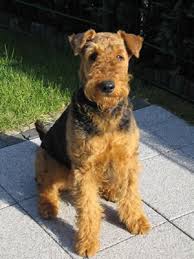
Food was love. No one ever went away hungry. After my brother and I grew old enough to live independently, the chief beneficiary of my mother’s affection was an Airedale, Cassie, who was so well taken care of I affectionately nicknamed her “Little Sister.”

Cassie was the runt of the litter, but under Mom’s care she grew to be about as wide as she was tall. It was not uncommon to find her cooking an egg or boiling a chicken to “sweeten” the dog’s dinner.

At the time it seemed funny. Since then, I have come to understand it as something more – You can’t love without giving.

The truth of this observation is borne out daily in the market place. In fact, much of modern commerce is built around this fundamental aspect of our nature. Implicit in many advertisements for goods or services, explicit and inescapable in the buying occasions organized to coincide with celebrations of those we love – Valentine’s Day, Christmas, Father’s Day, and, of course, Mother’s Day – is the knowledge that we can easily be persuaded to demonstrate our affection for someone we love by buying something for them.

The impulse to give to those we love is irresistible. What we call humanitarianism is nothing more than a healthier extension of this basic instinct and a broader, more inclusive love. We give to each other out of love, but the gifts we give pale by comparison to the gift of love itself.

Posted in Inspiration | 2 Comments

The Joy of Service

donate_thankuWhen I wrote to tell JoAnn Cayce she had been nominated for a national award, JoAnn responded:  “I don’t know this fellow that’s nominated me – he happened to be the mayor of an adjacent town – and I don’t know what I’ve done that he thinks is so special.  I’m just doing what my mother and grandmother have done before me.  And besides, I don’t have much use for awards anyway.  The President wanted to give me an award last year and I told him to put it in the mail.”

I loved her response so much I tried to call her.  For six months, she wouldn’t talk with me.  She was too busy taking care of the poor to be bothered talking about it.

Finally, one hot summer day we got together at her home in a wide spot in the road, called Thornton, Arkansas. When I asked her why she did what she did, she told me her earliest memories were of her mother taking care of people.

“My mother always saw after everybody who couldn’t see after themselves.  We never knew who would be eating or sleeping with us.  She would take in prostitutes, alcoholics, anyone.  She was always filling out papers for them, taking people food or clothing – whatever.  In her later years she would get up in the morning and put on a big pot of turnip greens or beans or soup and she would watch the people coming down this road out here to see who might be hungry.”

JoAnn followed her mother’s lead for more than forty years.  A one-woman Salvation Army, she did whatever needed to be done for the poor in the four counties surrounding the little town of Thornton, Arkansas.  It is a mark of her impact that many government agencies referred problems they couldn’t solve to her.

When I asked about it, she said “I do nothing” and pointed to the contents of her two storage sheds.  “All this stuff has been given to us.  I’m just a tunnel it flows through.  It didn’t come from me.  It comes from caring people.  A lot of them, I never see.  I don’t even know how they find out about me, but they will come here and bring things or drop them off on the porch.”

JoAnn believed human begins cannot be fully happy until they serve the purpose God intended for them.  She found her joy in helping others and felt blessed by the process.

“The poor have done for me more than I will ever do for them,” she said.  “They make me feel needed.  What would I do with my life if I didn’t have people who needed me?  Play bridge?  Collect dolls and clean house?  Anybody can dust!  It’s a joy to just be alive and be of service to somebody.

“I don’t care how who you are,” she said.  “You can find a way to help somebody.  When you want to find a way, there is a way.  Don’t ever be afraid to do what is in your heart.”

Posted in Inspiration | 3 Comments

The Gift of the Forrest: Jane Goodall at 80

jane & WillJane Goodall’s vision for her life began to form at the age of five when she hid in a chicken coop to see if she could discover “where on a chicken was there an opening big enough for an egg to come out.”  She still recalls tumbling out of the hen house in excitement to tell her mother her discovery.

Shortly thereafter — by the age of eight — she had fallen in love with Tarzan and decided she wanted to live in Africa.  “I knew that, somehow, I would go to Africa and live with the animals,” she says.  “I don’t think I spent too much time wondering exactly how I would do it.  I just felt sure the right opportunity would somehow come.”

At the age of twenty-three, her dream came true.  She was invited to visit a friend whose family had bought a farm in Kenya.  While she was there, she met Louis Leakey — the man who, more than anyone else, shaped the direction of her life.

The renowned anthropologist offered her a job on the spot, at first working as his secretary, then in the fields of Olduvai Gorge.  But Jane wanted more.  She wanted to find a way to watch wild animals living undisturbed lives.  She wanted to bridge the distance between man and beast and move among them without fear.  She wanted to return to the hen house and discover the secrets of the natural world.

She was twenty-six when she first set foot on Gombe National Park.  On her sixty-second birthday, 18 years ago today, we met in Washington.  The thirty-minute morning meeting we had scheduled turned into lunch, dinner, and then a bit of scotch as we talked into the night about the state of the world, the gift of the forest, and the “fuzzy line” between man and beast.

“Chimpanzees are so like us,” she said. “Their blood and their response to disease are like ours.  A lot of their behavior is like ours.  They learn by watching one another, then imitating.  Most important, they feel pain, sorrow, and fear just like we do.”

She illustrated the closeness of the connection by telling the story of Old Man, a chimpanzee brought to a zoo in North America when he was an adolescent.  “We still don’t know what happened to him there,” Jane said, “but whatever it was, he came to hate people.”

When Old Man was rescued, he was put on an island with three females.  A young man named Marc Casano was given the job of looking after them.  He was told how dangerous these animals were and instructed not to go on the island with their food.  Instead, he was told to paddle a boat toward the island until he was close enough to throw the food on the shore and then leave.

Marc did as he was told but as he watched the animals he couldn’t help noticing how affectionate they were with each other.  He decided he wanted to have a better relationship with them and tried to make friends.  He came closer and closer to shore until he could actually hand Old Man a banana.  Soon the two were playing together.   Eventually, Old Man would even let Marc groom him — an act of complete trust.

One day, Marc slipped and fell, startling an infant nearby.  The mother heard the cry and charged protectively, leaping on Marc’s back and biting his neck.  Before Marc could get up, the other two females joined the attack.  He felt his arm go numb and blood running down his neck.  He looked up to see Old Man flying toward him.

But instead of joining the attack and finishing him off, as Marc feared, Old Man seized the females, pulling them off and hurling them away. He stayed close as Marc dragged himself to the boat, threatening the females every time they tried to attack again.

“Old Man saved Marc’s life,” Jane said.  “There is no doubt about it.  The chimps could easily have killed him.”

“I tell this story a lot,” she went on to say, “because it says so much about our relationship with chimps and other animals.  If a chimpanzee can reach out to help a human, then surely humans can reach out and try to help chimps and other living creatures.”

Jane’s understanding of nature — the gift of the forest — and her resulting reverence for life has led her to campaign for compassion.  The woman who yearned for the jungle at the age of eight and spent 36 years living in solitude and solidarity with wild animals, now spends most of her time on airplanes, traveling from one urban area to another, never spending more than two weeks in one place at a time.

“I hate my suitcases, packing, unpacking.  Ironing — I hate ironing,” she says.  “But it is all made worthwhile when I think of the forest and what it has given me.  It makes me sad that I can only get back there for short visits, but then I think of how lucky I have been.  I have spent years doing what I wanted to do most of all – being with wild, free chimpanzees in the forest.  Now is my paying back time.”

Her central message is the unity of life.  “It is not one thing to save man and another to save the animals,” Jane says.  “Together, we can make the world a better place for all living things.”

Posted in Inspiration | 5 Comments