Hate

Words of hate produce acts of hate.

Robert Bowers spewed hatred on social media for years before turning his rants into reality, storming into the Tree of Life Congregation Synagogue in Pittsburgh, killing eleven people and injuring seven more.  It was the largest and deadliest attack on American Jews in our nation’s history.

“I just wanted to kill Jews,” Bowers said.

In the aftermath, perhaps the most chilling observation came from one of his neighbors who said he was surprised because Bowers seemed like just a “normal guy.”

One of Cesar Sayoc’s employers went further.  He said Sayoc was “a nice guy”; yet his hated was clearly visible, posted on the van he lived in and the t-shirts he wore.

Sayoc sent pipe bombs to 14 people, frequently the target of hate speech, and threatened others on Facebook.  In the process, this “nice guy” earned the distinction of being the first person to ever attempt to assassinate two Presidents.

These events did not occur in a vacuum.  They are part of stream of events and the tenor of our times.  The daily news is full of vitriol.  Civility is lost.  In broadcast media – and too often in our personal lives – people don’t talk to each other any more. They talk at each other and over each other, discharging their opinions with as much velocity as possible.

Every day it’s something else. We are presented with disaster after disaster.  We cannot fully comprehend one before being presented with another.

Was it only last week that all we could talk about was Jamal Khashoggi?  Whatever happened to that?

Where are the children taken from their mothers at the border?   Were they ever re-united?

Is North Korea destroying its nuclear bombs or quietly building more?  Who knows?  Who do you believe?

It’s a symptom of the schism in our society.  The lines are drawn.  Instead of a wall on the border, walls have been built between us.  We could not be further apart.

“Diabolic” comes from a word meaning “to divide.”  Diabolic forces separate us from each other and God.  In our lives they find expression in ego, anger, pride, radical religions, nationalism, racism, envy, ignorance, and greed.  These are the forces of darkness.  They divide and conquer.

By contrast, “heaven” means “harmony.”  If demonic forces divide, love unites.

To date, the most comprehensive and penetrating analysis of the genius of America comes from Alexis de Tocqueville’s classic study, On Democracy in America.  His observations of the character of our society have stood the test of time and become the reference point for all subsequent analysis.

Asked to sum up his findings, de Tocqueville said, “America is great because America is good; America will cease to be great when it is no longer good.”

For de Tocqueville, religion was the “point of departure” for the entire American experience.  “It must never be forgotten that religion gave birth to Anglo-American society,” he said.  “In the United States, religion is therefore mingled with all the habits of the nation and all the feelings of patriotism, whence it derives a peculiar force.”

At about the same time, John Adams, our second President, made a similar observation.  “Our constitution was designed only for a moral and religious people,” Adam said. “It is wholly inadequate for the government of any other.”

How long will it take for us to learn what we have long been told and know in our hearts to be true?

My friend, Tim Love, sent me a reminder this morning, prompting this post. “Only God can reveal truth,” Tim said.  “God tells us this time and time again. God is love.”

The great and enduring challenge of humanity is to get beyond the superficial elements that divide us.  The only thing that separates us from God and each other is the belief that we are separate.

Hell is the alternative.

The word “hell” comes from the old English.  Literally, it means “to separate” or “to build a wall around.” To be “helled” was to be shut off.

There are days when it feels like that’s where we are. We have to decide if that is where we want to be.

Posted in Inspiration | 1 Comment

The New America

“There is a new America every morning,” Adlai Stevenson said, “and that new America is the sum of many small changes.”

Every day, I am repeatedly reminded of this fact. This is not the country I grew up in.

I grew up in a time of hope and promise.   Flush with the allies’ victory in World War II, America was coming into its own.  We knew who we were, what we stood for, and who stood with us.

My youth was in an America where we knew our neighbors and didn’t see the need to lock our doors.  Strangers were welcome and everyone came together for the Fourth of July.  You were either in the parade or watching it…And sometimes both.

Walter Cronkite was the most trusted man in America.  He and his colleagues on ABC and NBC, the only other channels, told us the evening news.  They let the facts speak for themselves.  There were no pundits sitting next to them, spinning the events and trying to tell us what to believe.

There were political disagreements to be sure, but they stopped at the water’s edge.  We were united when it came to world affairs; confident in our allies and the institutions designed to protect the world order we had helped create.

The political parties were well defined.  You belonged to one party or the other, but there was broad agreement about where we were going as a society.  The only real question was how to get there.  The disagreements were about tactics not goals, the means not the end.

For the first half of my life, Republicans were closely aligned with the cause of civil rights.  They took their history seriously and the relished the responsibility that came with carrying Lincoln’s mantle.

In 1960, the year of Kennedy and Nixon, the Republican’s platform declared: This nation was created to give expression, validity and purpose to our spiritual heritage — the supreme worth of the individual.  In such a nation — a nation dedicated to the proposition that all men are created equal — racial discrimination has no place.

Meanwhile, Democrats struggled with their party’s internal contradictions on this issue and fought to find a unifying identity.  When Kennedy failed to submit a promised civil rights bill, three Republican Senators introduced one of their own.  They challenged Kennedy and forced him to deliver on his promise.

The promised legislation became The Civil Rights Act of 1964.  It is worth noting, it passed the House with support of only 61 percent of House Democrats.  Eighty percent of the Republicans supported it.

But that would soon change.  Passage of the Civil Rights Act fundamentally altered both parties.

When he signed the Civil Rights Act, Lyndon Johnson told his aide, Bill Moyers, “I think we just delivered the South to the Republican Party for a long time to come.”

He was right.

Two months after passage of the Civil Rights Act, a key Democratic foe of civil rights, South Carolina Senator Strom Thurmond, switched his party affiliation and began working to remake the Republican Party so that it could appeal to Southern white voters.  Thurmond – and the segregationists who followed him – developed the “Southern strategy” that transformed Republican politics.

Democrats reacted by becoming the party of everyone else.  To this day they claim there is room for everyone under their ‘big tent’, but a party that stands for everything too often stands for nothing.

It is beyond strange that time has somehow converted the Democrats into the more conservative party – dedicated to conserving social security, Medicare and other social advances over the last five decades – while the Republicans are behaving like the radical party bent on dismantling long-standing institutions of government and social reforms revolving around health care, poverty, women’s rights, and gender equality.

A democracy is, in Lincoln’s words, a government of the people, by the people, and for the people.  By and large, that no longer exists.

Our society is increasingly becoming a plutocracy – a government of the rich, by the rich, and for the rich.  These are people with no fixed political persuasion.  They are opportunists who will support whoever supports them. Their singular motivation is the desire to preserve and increase their wealth.

Small wonder politicians as far apart as Bernie Sanders and Donald Trump found common ground in railing against Wall Street in 2016.  Speaking to totally different constituencies, they both struck a responsive chord when they said the system is “rigged.”

This is the new America – fractious, hyper-partisan, increasingly isolationist, and self-serving.   It is an America where families often can’t talk together, neighbors don’t trust each other, strangers aren’t welcome, and fear prevails.

America has changed.  The one certainty is that it will change again.  The only uncertainty is degree and direction.

America is always a work in progress.  America is becoming.  America is a promise.  America is an ideal to cherish and a dream to pursue.

America began with a claim of responsibility and recognition – the declaration: “We the people.”  Every day, we must decide what we want America to be and act accordingly.

Nearly half of those eligible to vote in 2016 – over a hundred million people – didn’t vote.  As we approach the mid-term elections, we must be mindful that those who don’t vote let those who do decide for them.

Posted in Inspiration | 2 Comments

Mentors

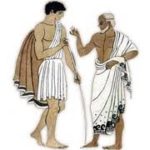
The first Mentor appeared in Homer’s epic poem, Odyssey. Composed near the end of the 8th century BC, Odyssey is the story of the king of Ithaca who struggles to find his way home after the Trojan War.

In the opening chapter, the goddess Athena disguises herself as Mentor, Odysseus most trusted friend.   Mentor approaches Odysseus’ son, Telemachus, and encourages him to find his father.  In the chapters that follow, Mentor provides guidance, encouragement, and support until Telemachus succeeds.

And so, from a story written nearly three thousand years ago, comes the modern concept and tradition of “mentors.”  The word has evolved to mean a trusted advisor, friend, or teacher.

History provides many examples – including Socrates and Plato, Plato and Aristotle, Aristotle and Alexander, Ghandi and King, Emerson and Thoreau, Warren Buffett and Bill Gates, Steve Jobs and Mark Zuckerberg, Maya Angelou and Oprah Winfrey, among others – but mentoring relationships are not limited to those of note.

Each of us has a birthright of potential that can only be actualized with the help of mentors. Somebody has to believe in us before we can fully believe in ourselves.

In this regard, I have been more fortunate than most.  I am humbled by the quality of my friends and mentors.  Some I sought.  Others found me and chose to invest in my growth and development.

Senator Frank E. Moss brought me to Washington. He sponsored me with a part-time job while I was in school and gave me my first job after I graduated.   He defined integrity and commitment to public service.

Arthur Flemming served in President Eisenhower’s cabinet and had Presidential appointments from four other Presidents.  During the last 20 years of his life, he had a standing reservation for lunch at Twigs, a restaurant near his office.  He held court there, entertaining a revolving cast of regulars and a seemingly endless supply of new friends.  He worked me into the rotation at least once a month.  We talked politics.  We talked religion.  We talked about life.

Mother Teresa changed the trajectory of my life with a single meeting. Henri Landwirth, a holocaust survivor, taught me about love and forgiveness and the way our troubles often fashion us for better things.  Hugh Jones taught me what it means to be true friend, becoming a brother in the process.

In similar fashion, Jane Goodall became a sister.  I met Jane on her 62nd birthday.  We were scheduled to talk for half an hour and wound up spending the day together, finishing that evening, sitting on the floor of her suite, sharing a bottle of scotch.  I was in awe of her then and even more so now as I have watched her tireless and determined efforts to try heal and save the world.

Bob Macauley, the founder of AmeriCares was a fearless philanthropist who lived and acted on his values.  I treasure the time spent with him in his library talking about the problems of the world.  Seemingly, nothing was beyond his reach.

Fred Matser and Rachel Rossow – one in the Netherlands, the other in Connecticut – taught me, perhaps the most important lesson of all:  There is no distance between souls.

But perhaps most significant in terms of my personal development was Viktor Frankl.  Viktor was the author of 32 books, including Man’s Search for Meaning, identified by the Library of Congress as one of the ten most influential books in the English language.

After reading Man’s Search for Meaning, I sent Dr. Frankl a letter expressing my admiration.  I told him I had stumbled on his book after an extensive period of soul-searching and that I wished I had found it earlier.

This book had a profound impact on me and I told him so.  To my surprise, Dr. Frankl answered my letter with a personal note raising questions that encouraged a response.  We exchanged letters several times after that before I found an opportunity to invite him to come to America to keynote a conference I was helping organize.

I met Viktor at the airport late one afternoon in l986 and peppered him with questions as we drove to town.  I continued my questioning over dinner and then reluctantly said goodnight.

The next morning, Viktor gave a stirring and thought provoking speech, receiving a standing ovation from the three thousand people attending the conference.  After lunch, I walked him back to his room and thanked him for making the long journey from Vienna for one speech.  I said good-bye not knowing when, if ever, I would see him again.

Early the next morning, the phone rang at my home.  When I answered, I heard Viktor’s voice.  He said his return flight did not leave until late in the day and he was wondering if I would mind coming down and spending some time with him.

We spent the entire day together.  Though nothing explicit was said, I could tell he was “working on me.”   Viktor had clearly thought about the questions I had asked the day he arrived and was trying to extend my thinking.  He probed and pushed with the gentle, thoughtful persistence of the good psychiatrist he was.

Afterwards, Viktor periodically sent me the text of something he was working on – a speech or an article – and asked what I thought.  The question was always phrased as though he was seeking my opinion, but I came to know it was more than that. He was looking for a way to extend our dialogue.

In much the same manner, I came to expect a periodic phone call. The ones I liked best were the ones where he said he was going to be somewhere in the United States and wondering if I could I find time to join him.  I jumped on every opportunity.

I could go on…The list of those who have benefited my life is long.  Suffice it to say, there would be little left of me if I subtracted the contributions of others.

Posted in Inspiration | 2 Comments

Means and Ends

Do the ends justify the means?

I have lived in Washington for more than 50 years.  I have never seen a time like this.  The question of ends and means comes up daily:

Do we increase the safety of Americans by banning the entry of people from Muslim countries?

Do we enforce immigration policy by separating mothers from their children?

Do we boost the economy by eliminating environmental protections?

Do we advance our political positions by demonizing those in the other party?

Nicolo Machiavelli was the first to raise the issue of ends and means in a political context in his treatise, The Prince, published in 1513.  Machiavelli said a good leader – The Prince – should choose the most effective means to his ends, be they harmless or cruel and violent.   For him, the only thing that mattered was the outcome.

“In judging policies,” he wrote, “we should consider the results that have been achieved through them, rather than the means by which they have been executed.”

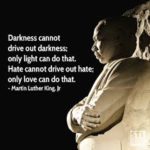
The opposing view was best expressed and embodied by Ghandi and Martin Luther King.  They felt the means and ends must be consistent.  “Darkness cannot drive out darkness,” King said, “Only light can do that. Hate cannot drive out hate; only love can do that.”

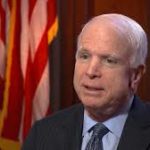
In this context, John McCain’s legacy looms large.  He is being remembered for his humor, humility, and courage.  But he represents more than that.

John McCain knew who he was.  He stood on principle, even when it did not advance his political position; and openly admitted and regretted the times he strayed from principal for political expediency.

McCain’s values were hardened in the crucible of a Vietnamese prisoner of war camp.  There he was tested like few others.   He had ample time – much of it in solitary confinement – to consider what he was living for, what he would die for, who he was, and who he wanted to be.

McCain came to understand that the end that matters most is not so much the goal we want to achieve but how we achieve what we achieve, and what we become in the process.

That’s how John McCain will likely be remembered.  Not so much for what he said, but what he did and how he lived.  He knew the means are the ends.

You cannot lie without become a liar.  You cannot steal without becoming a thief.  You cannot cheat without becoming a cheater.  You cannot live with honor and not be honored.

McCain crossed over.   He chose to be a statesman rather than a politician by devoting his life to a cause greater than himself.  History will remember – as I have told my son – “That’s what a hero looks like.”

Posted in Inspiration | 1 Comment

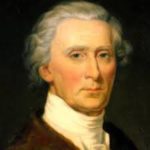
Charles Carroll’s Legacy

Charles Carroll was the last surviving signer of the Declaration of Independence, outliving Jefferson and Adams by 6 years.  He was also the only Roman Catholic to sign the Declaration, and, perhaps, the man who had the most to lose by doing so.

Carroll was the wealthiest man in the colonies at the beginning of the Revolution with a fortune estimated at $2 million dollars.  He lived to see the fiftieth year of American independence and died shortly thereafter, leaving us with these words:

“I do now here recommend to the present and future generations the principles of that important document as the best earthly inheritance their ancestors could bequeath to them, and pray that the civil and religious liberties they have secured in my country may be perpetuated to the remotest posterity and extend to the whole family of man!”

Our Founders promise and Carroll’s bequest have materialized in the greatest nation the world has ever seen.  The principles they established have brought us from thirteen obscure colonies to the world’s only superpower.  They have established new standards of life, liberty, and happiness.

Free men and those yearning to be free still look to the United States as the light of the world and the best hope for liberty.  Our place in the world is unrivaled and unquestioned.

What makes America great?  What is our most valuable asset?  Is it our wealth, our natural resources, or our military might?  Or is our most precious asset the character of our people?

President Eisenhower said, “Whatever America hopes to bring to pass in the world must first happen in the heart of America.”  It follows that whatever change is to come to pass in America must first happen in the heart of its people.

Values are not hereditary.  Great ideals do not live in the hearts and minds of men simply because they are right.  They must be taught.  They must be learned and lived.

At the birth of our nation, a citizen approached Benjamin Franklin and asked, “What kind of government have you given us?”

“A republic,” Franklin replied, “if you can keep it.”

The Republic will endure as long as we continue to cherish the ideals of the men who created it.  From Bunker Hill to Berlin, the best of our blood have fought to defend democracy.  But that is not enough.

The battle for freedom is not reserved for the few or the brave on a distant shore.  The battle for democracy must be fought here, as well as there, day by day, with the knowledge that liberty won today may be lost tomorrow.

“There is a new America every morning when we wake,” Adlai Stevenson said, “and that new America is the sum of many small changes.”  Our task is to guide these changes and decide what kind of America we want it to be.

“We the people.”  The story of America is our story.  America will be whatever we are.

Posted in Inspiration | Leave a comment