Politics

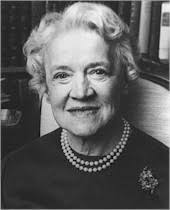
Margaret Chase Smith

I can’t write about politics any more.

They say you should only write about things you know.  I grew up on Capitol Hill and spent half of my professional life there.   Once I knew it like the back of my hand, but I don’t recognize it now.

When I came to Washington, giants walked the corridors of the Capitol.   One of the largest was a small woman from Maine – Margaret Chase Smith.   A moderate Republican, she was the first to call out Joe McCarthy for the liar and bully he was.  She did it to his face on the floor of the Senate when most of her colleagues where sucking in their balls, ducking, and running for cover.

In a “Declaration of Conscience”, she denounced “the reckless abandon in which unproved charges have been hurled from this side of the aisle.”   She said McCarthyism had “debased” the Senate to “the level of a forum of hate and character assassination.” 

While acknowledging her desire for Republicans’ political success, she said, “I don’t want to see the Republican Party ride to political victory on the four horsemen of calumny—fear, ignorance, bigotry, and smear.”

Paul Douglas of Illinois was another hero.  Dr. Martin Luther King, Jr. called him “the greatest of all the Senators.”

There is plaque at Paris Island that pretty much says it all. It reads:  “Graduating from Parris Island in 1942 as a 50-year-old Private, Mr. Douglas was an inspiration to all.  He rose to the rank of Major while serving in the Pacific Theater where he was wounded at Peleliu and Okinawa.  Retired as a Lieutenant Colonel. The former economics professor later served as a U.S. Senator from Illinois. By his personal courage, fortitude and leadership, the Honorable Paul H. Douglas demonstrated the personal traits characteristic of a Marine leader.”

Douglas received the bronze star and two purple hearts.  The last injury cost him the use of his left arm and left him permantly disabled.   In the Senate, he personally wrote the Senate’s first ethics manual and earned a reputation as a man of incorruptabilty. 

Ted Moss was another pillar of integrity.  Moss refused campaign contributions he sorely needed from the Senatorial campaign committee of his own party because they came with strings attached.  When he squeaked out a victory, he took on the tobacco industry to inform the public of the danger of smoking at a time when their lobby supported half of Congress.  The Surgeon General’s warning on a pack of cigarettes is one of his contributions. Then Moss took on the automobile industry, which, believe it or not, insisted it was too expensive to put seat belts in cars. Now you can’t drive without one.

I also fondly remember Jacob Javits, George Mitchell, Bobby Kennedy, Barry Goldwater and Hubert Humphrey.  Goldwater and Humphrey come to mind a lot these easy because they were politically as far apart as you could be.  They disagreed about everything but they were never disagreeable.  They were both gentlemen.  They respected each other, listened to each other, and would even take the time to answer the impertinent questions of an elevator boy.

That was the first of my many jobs on The Hill.  Over some twenty-five years, I did just about everything you can do there.  As a professional, I worked for four Senators – two Republicans and two Democrats.  I did so without hesitation or compromise.  While there were some differences between them, there were far more commonalities – most of all a commitment to “make things better.”  Significantly, all four of them left Washington with less wealth than they had when they arrived.  That doesn’t happen much these days.

These are the people I remember.  These are the people I miss.

In A Man for All Seasons, Robert Bolt writes,  “If we lived in a State where virtue was profitable, common sense would make us good, and greed would make us saintly.  And we’d live like animals or angels in the happy land that needs no heroes.  But since in fact we see that avarice, anger, envy, pride, sloth, lust and stupidity commonly profit far beyond humility, chastity, fortitude, justice and thought, and have to choose, to be human at all…why then perhaps we must stand fast a little –even at the risk of being heroes.”

The moment is upon us.  Perhaps there will be those who will step forward and stand on principle.  Perhaps a hero will emerge.  There is always hope the better angels of our nature will prevail.

Sad to say, I wouldn’t bet on it.
Posted in Inspiration | 4 Comments

America is Great

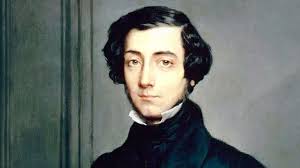
Alexis de Tocqueville provided the first – and perhaps best – analysis of American society.  

The French philosopher and historian came to this country in 1831 and spent three years in the United States.  He timed his visit deliberately, in his words, to be here “near enough to the time when the states of America were founded to be accurately acquainted with their elements, and sufficiently removed from that period to judge some of their results.”

Asked to sum up his observations when he returned to France, de Tocqueville said, “America is great because America is good.  America will cease to be great when it is no longer good.”

In Democracy in America, published in 1835, de Tocqueville explained his conclusion saying there is an “enlightened self-interest” that governs nearly every public and private action in America. 

“They show with complacency,” he wrote, “how an enlightened regard of themselves constantly prompts them to assist each other.”

De Tocqueville was talking about the core value at the heart of America – Compassion.  It’s a value as old as civilization itself, adapted, perfected, and structured by the founding fathers to fulfill the promise of a new land.

Five centuries before Christ, Sophocles observed, “kindness begets kindness.”  Later, in Rome, Tertullian observed, “He who lives only to benefit himself confers on the world a benefit when he dies.”

Our Judeo-Christian heritage emphasizes this value.  The Torah reminds us “deeds of love are worth as much as all the commandments of the law,” while Christians are bound to “love one another as I have loved you.” 

The founders of the American republic were animated by their Christian faith.  They established compassion as the central value in our social, economic, and political systems.  Without it, our society would self-destruct. 

As I watch the daily news, I can’t help wondering if we have reached the tipping point.  Is de Tocqueville’s prophecy coming true?

Compassion is the bridge between us.  It connects our lives by a thousand sympathetic threads.  Daily it seems that bridge is being destroyed.  The threads that connect us are being shredded.  We have never been so divided and alone.

I have drunk deeply from the well of goodness at the heart of America.  I have tried to contribute to it in my personal life and with programs I helped create.  It has enriched the quality of my life more than I can say, but the tide seems to be turning. 

The dogs of darkness have been unleashed.  Fear is rising and the better angels of our nature being oppressed.  Nothing less than the future of our society is at stake.

A poem stands at the entrance of the United Nations, carved on buildings we helped erect to support the alliance we helped create at a time when we were the light of the world.  The words were written by the Persian poet, Saadi Shiraz.

All the sons of Adam are part of one single body,

They are of the same essence.

When time afflicts us with pain

In one part of that body

All the other parts feel it too.

If you fail to feel the pain of others

You do not deserve the name of man.

This is compassion distilled to its essence.  It rests on the difference between saying, “I am my brother’s keeper” and saying “I am my brother.”   

That understanding is what has always made America great.  That fundamental goodness is what is now being challenged. 

In the words of Pogo, “We have met the enemy and he is us.”  As always, the question is how will we respond.  America will be whatever we choose to be.

Posted in Inspiration | 5 Comments

Entropy

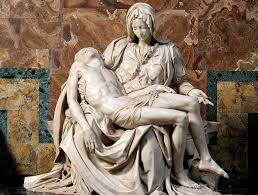
In 1972, a deranged man, named Laszlo Toth, dashed past the guards in St. Peter’s Basilica, vaulted a marble balustrade and attacked Michelangelo’s Pieta.  He struck the Madonna with a hammer twelve times before he could be stopped.  When he was done, over 100 fragments of the Renaissance masterpiece littered the floor of the chapel.

That happened a week before my twenty-seventh birthday.  I will be 74 at the end of this month, but I still remember it vividly. 

I had traveled through Europe with friends the year before.  We took turns prioritizing each day’s activities.  Whenever possible my choices involved visiting Michelangelo, long near the top of my panoply of heroes.  We saw his David, Moses, St. Peter’s Basilica, the Sistine Chapel, and, of course, The Pieta.  

“It is a miracle that a rock, which before was without form,” Giorgio Vasari wrote, “can take on such perfection that even nature sometimes struggles to create in the flesh.”  

Vasari was right.  It was awesome.

Michelangelo carved the Pieta from a single block of Carrara marble.  Such was his genius that he said he could see the sculpture imprisoned within the marble.  All he had to do was release it by chipping away the unnecessary pieces. 

I have remembered Toth’s attack through the years not only because I admire Michelangelo but also because it placed the cycle of creation and destruction in a context I had never considered before and have never since been able to forget.  

It was shocking to realize that one of the great masterpieces of the world – two-year’s work for a once-in-forever genius – could be destroyed in matter of moments by any mindless cretin so inclined.

Through the years that thought has stayed with me and morphed into a broader understanding of the nature of things.  I have come to understand how much easier it is to break than build, to take things apart than to put things together, to divide than unite.   As Toth first cemented into my consciousness, it’s easier to destroy than create.

Worse. It is not only is it easier.  It is inevitable. 

As the poet, W. B. Yeats, wrote, “Things fall apart; the centre cannot hold.” 

Physics calls it entropy – a decline into disorder.  According to the second law of thermodynamics entropy always increases with time.

The implications for our lives and the future of our country are inescapable.  Progress is not inevitable.  The barbarians are always at the gate. What was dearly won can easily be lost. 

The Renaissance of Michelangelo built on the traditions of ancient Greece, but there were decades of darkness before and after as the Renaissance devolved into the Age of the Inquisition.  

The five hundreds years since the Renaissance have not produced another Michelangelo or DaVinci, but they did produce a Washington and a Jefferson.  The essential elements of Ancient Greece and the Renaissance found fertile ground in this new land, fueling the thinking of our founding fathers – the closest thing to Renaissance Men the world has seen since that time.

This cycle of rebirth and regeneration is known as Negentropy.   Negentropy is the reverse entropy.   It means bringing into order – organization, structure and function – the opposite of randomness or chaos.

One example of negentropy is the Solar System.  Another example is life, which fundamentally is the ability to make something out of nothing.

As I consider what I can remember of my past, the world that was and the world that is, it’s hard not to believe that I have seen the best of America, a gift of our founding fathers fulfilled by the “greatest generation.”   

I am profoundly grateful for the life I have been given, but I fear for the future.  I can’t honestly say I believe my generation will be leaving the world a better place than we found it.  Many of us have tried.  Too many have not.

Too many have fallen to the temptations Ghandi identified as the seven deadly sins:  Wealth without work, pleasure without conscience, knowledge without character, commerce without morality, science without humanity, worship without sacrifice, and politics without principle.

Selfishness has over-ruled selflessness.  Indifference, ignorance and arrogance prevail.  Authorities and institutions are broadly questioned – particularly when that suits our personal point of view or convenience – and we have produced a new breed of human beings – fact-resistant homo sapiens, locked in to the silos of their beliefs, impenetrable to reason.  

The dissipation of our society is inescapable and it is likely to get worse before it gets better – if it ever does.  Ultimately, and always, it is up to us.  It’s our country.  It’s our world.  The future of our children is at stake.

As is so often the case, the answer is to respond with love.  Where there is love, there is always hope, there will always be life.

Posted in Inspiration | 5 Comments

The American Dream


I have seen the best and worst of America.  I have lived the American Dream and grown up with a deep appreciation for the gift it is to be an American. 

My grandparents were among the 30 million people who immigrated to the United States during the first quarter of the last century.  My father was a coal miner with a sixth-grade education.

When I was thirteen, my Father told me he was dying.  He said he had been to the doctor for the annual physical required by his company, expecting nothing and feeling fine only to find out he had black lung.  The doctors told him he might have five years to live.

I remember it vividly even now, the pain I felt as the entire landscape of my father’s life suddenly came into view:  a man raised outdoors with a love of nature, forced underground away from the light by the depression, the immediate demands of feeding a family postponing then eliminating any hope he had of getting an education.  I remember pondering the ironic tragedy of a man who had never smoked so much as one cigarette in his life acquiring emphysema – a disease most commonly associated with heavy smokers.

“I’m telling you this not because I want to scare you,” he said, “but because you know how important education is to me.  It looks like I’m not going to be here to help you.  I want you to promise me that somehow you will find a way to do what I couldn’t do and finish your education.”

There was no choice, of course, no possible response other than, “I will.”  And so I made that solemn commitment with fear and trepidation, not knowing how I would be able to do what no one in my family had ever done before.

Through the grace of God and the abundant opportunities provided by this country, I was able to keep my promise.  I won a scholarship to George Washington University.  The day I graduated from high school I left the small mining community in southeastern Utah where I was raised for Washington, D.C. and never returned.

Instead, I began working at the United States Senate while I went to college and law school.  After school and a brief stint in the Army, I returned to the Senate where I became involved in Congressional Oversight.  For 15 years as an investigator, chief investigator, counsel, director of oversight, and, ultimately, staff director of a congressional committee, I turned over rocks for the Senate looking for the scum of the earth.

I found people posing as doctors who had never gone to medical school, dentists who drilled holes in healthy teeth to create cavities they could fill at public expense, nursing home owners who abused people they were supposed to care for, clinical laboratories who performed “sink tests” – literally pouring the medical samples they gathered down the drain or flushing them down the toilet to spare the expense of testing them properly –  and a host of other creative criminals. 

An activist by nature, I posed as a Medicaid patient for a year, visiting clinics across the country to test the quality of medical care provided to the poor.  I went undercover and carried a wire in a joint investigation with the U. S. Attorney in New York, chased crooks and corrupt politicians in Chicago, and danced with the Mafia more times than I care to recall. 

Along the way, I was taken for a ride by a wise-guy with a gun in a shoulder holster and threatened by high-priced lawyers.  I was offered bribes and “soft” company, had my home burglarized, my phone tapped, and my car torched. 

Nevertheless, I took pleasure in shining the light on the vultures that feed at public expense and take advantage of the taxpayer, the poor and disabled.  To this day, I still get some satisfaction in knowing that over the years we recovered millions of dollars, saved billions of dollars, and helped put a lot of bad guys out of business and in jail. 

But despite our success, I found myself getting increasingly sad and cynical.  The problems we “solved” kept recurring.  The scope of the crimes we were investigating kept growing.  The Hill was becoming increasingly partisan and dysfunctional.  I couldn’t help feeling we were winning a lot of battles but losing the war. 

Finally, I came to the conclusion that the “top down” remedies I had pursued in Congress did not work.  Long-term change, the only kind that can be sustained, always comes from the bottom up.  Such is the nature of a democracy.

With this in mind, I did a l80.  I decided to look for the best instead of the worst and began what I have since referred to as a magnificent odyssey, searching for the heart of America.  Taking a lead from Albert Schweitzer, who observed, “Example isn’t the best way to teach, it is the only way,” I began looking for people who represent the best of our society, the best instincts of man, and the best part of our selves. 

The people I write about in my books and blog emerged from this process.  If you follow my blog, you will note they come from all walks of life and all ages, representing a cross section of the richness and diversity of America.  While each of these individuals is remarkable in their own right, what is most remarkable is the collective testimony they offer to the enduring vitality of America’s core values.

Ever since September 11, 2001 and the war on terrorism, increasing attention has been focused on our values.  But these events only extend a need that has long been evident. 

Twelve years earlier in his farewell address, President Ronald Reagan expressed this concern in “the great tradition of warnings in Presidential farewells.”  At a time when he could have addressed many other issues, President Reagan chose to focus on the need for “an informed patriotism” in our country.

“Those of us who are over 35 or so years of age grew up in a different America,” President Reagan said.  “We were taught, very directly, what it means to be an American.  And we absorbed, almost in the air, a love of country and an appreciation of its institutions.”

President Bill Clinton echoed Reagan’s concern.  “Beyond all else, our country is a set of convictions,” Clinton said in one of his last speeches before leaving office.  “We hold these truths to be self evident:  that all men are created equal; that they are endowed by their Creator with certain inalienable rights; that among these are life, liberty and the pursuit of happiness.  Our whole history can be seen first as an effort to preserve these rights and then as an effort to make them real in the lives of all of our citizens.”

President George W. Bush, Clinton’s successor in office, eloquently expressed the same beliefs in his Inaugural address, reminding us “America has been united across generations by grand and enduring ideals.”

The genius of America is that the core values that make our country great are the same values that define our success as individuals.  That is why America is always a work in progress.  America is becoming.  America is a promise.  America is an ideal to cherish and a dream to pursue.

What are these enduring ideals? 

What are America’s core values? 

What makes us successful as individuals and as a nation?

More than a decade ago, I wrote The Heart of America:  Ten Core Values that Make Our Country Great to try to answer these questions.  It was published by HCI, publisher of the Chicken Soup for the Soul series.  It has just been reprinted by Amazon and is available in paperback or e-reader.


Posted in Inspiration | 2 Comments

Unity

I went to church yesterday.

Normally…no big deal.  Nothing to write home about.

But this was something different.

I belong to one of Annapolis’ mega churches.  It’s a contemporary church with contemporary music.  It began in l987 with 25 people and has grown to include two campuses in Maryland – one in Annapolis and another on the Eastern Shore – with sister churches on five continents.

The membership is predominately white, middle-class, and middle aged.  Several thousand people attend one of the four services every weekend.

The church I attended yesterday was founded in l803 on land purchased by seven former slaves.  It is a couple of blocks from where we live, the oldest African American church in Annapolis, and one of the oldest in the state.  The congregation is small, old, and almost entirely black.

I went to the 11:00 AM service – the only service – and joined the 75 to 80 people there.   I came in with my head full of nonsense from the morning news:  Is Elizabeth Warren really a Native American?  Did she claim to be one for political purposes?   What’s up with the Governor, Attorney General, and Majority Leader in Virginia?  Is there anyone in Virginia politics who didn’t think it fun or funny to wear black face while in college?  How much does it all matter?

As the service began, I felt some peace and an immediate kinship.  I was struck by the spirit of the congregation and the warmth of the people.  That combination in the context of my morning musings forced a conclusion that has escaped me for a while.

I am African American.

…So are you.

I’m not running for office, so bear with me.

Years ago at Jane Goodall’s invitation, I participated in the National Geographic’s Genographic Project.  It was designed to use DNA analysis and cutting-edge technology to answer fundamental questions about where we originated and how our ancestors came to populate the Earth.

This study of genetic diversity allowed scientists to reconstruct a family tree of the human population.  There were a lot of interesting findings, but the largest was this compelling truth:  In a very real sense, everyone alive today is African.

In my case, the results show my ancestral trail began in North Africa.  About 60,000 years ago, those who were to be my direct ancestors moved north to the Mediterranean.  In the early 1900s, about a hundred years ago, one of them, my grandfather, arrived at Ellis Island from Greece.

As I sat there and considered the import of this information, I realized that the things that seemed to separate me from the rest of the congregation were distinctions without a difference.  The truth is we were separated only by generations, the distance and the direction from where we began to where were we are.

Theologians have long said that if we believe there is one God, if we believe He is the Father of us all, then no child of God can be said to be outside the pale of human kinship and no individual can be considered less human, fundamentally different, or apart.

Science now offers its confirmation.  In the words of Craig Venter, a pioneer of DNA sequencing and a leader of the National Geographic’s study, “The concept of race has no genetic or scientific basis.

Posted in Inspiration | 5 Comments