Adversity

When I was a boy of nine or ten, I was walking through the woods with my Father and came upon a large fallen tree.  For some reason, I noticed the rings revealed where the tree had been cut. 

When I asked about it, my father gave me the conventional answer, explaining how the rings of the tree reflected the tree’s age.  Then he expanded that observation in a way I have never been able to forget.  “If you look closely,” he said, “it can also tell you something of the tree’s history.”

Dad pointed to a narrow band near the tree’s center.  “That tells you this was a tough year for this tree.  If you count back the rings and determine the date you will probably find that it was a dry year or that the tree faced some other challenge to its growth.  Conversely, the broad band tells you the tree had a year of expansive growth.”

“But what is most important is the pattern,” he said.  “Broad bands almost invariably follow narrow bands.  That’s because in the dry years and difficult periods the tree had to put its roots down deeper in order to survive.” 

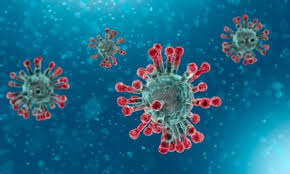
There is no escaping the fact that we are currently facing difficult times.  Today is nothing like yesterday.   A virus we had never heard of a few weeks ago has closed schools, shut down travel, devastated our economy and left us shuttered in our own homes. 

The leaders of some states and major cities have established curfews.  In some states the National Guard has been called out to quarantine significant parts of cities.  

We are being challenged and pushed to the limit.  We can’t help wondering if life as we knew it will ever be the same.

As always, the question is – What do you do about it?  How do we respond?

How do we respond as a nation?  How does our government respond?  More important, how do we respond as families and individuals?

Our response has to begin by understanding the challenge.  Anyone who has been in the military will tell you that you don’t go into battle blind.  We have to understand what we are up against. 

The best estimate at the moment is that 40 to 70 percent of our population will be infected.  Fortunately, most of these people will recover on their own – but many will not.  Those who do not, those who become seriously ill, will severely tax our health care system and our ability to care for them.

And it is not going away soon.  We’re talking months – not days or weeks.  

So what do we do?

First of all, know we will get through this and come out the other side better than we were. 

The last time we faced a challenge of this size was World War II.  It is no accident that we call those who faced that challenge our “greatest generation.”  It is no accident we emerged from that experience as strong as we have ever been.

This battle will require the same degree of shared sacrifice and purpose.  Each of us must take responsibility and do our part. 

The easiest way not to get this virus is to act as if you already have it.  That’s also the easiest way to keep it from spreading.

This means changing fundamental elements of our existence – how we work, shop, play, and entertain ourselves. 

But we are not being asked to do anything we cannot do.  History shows we are always at our best when things are the worst.

Adversity introduces us to our true selves.  We gain courage with every fear we face, strength with every challenge we meet, and confidence with every obstacle we overcome.

Like the tree, we must reach down deep and draw on the best part of ourselves.  That includes not only taking care of ourselves, but also being mindful of those who can not.

The hidden message this virus carries is how close and interdependent we are.  We need each other.  We depend on each other.  There is no way to separate what happens to one from what happens to another. 

Community comes when we recognize the opportunity for service this provides.   Many of our infirm and elderly were isolated before this virus.  They are even more isolated now.  They will be in even greater need as the days and months progress. 

Something as simple as a periodic phone can make a big difference.  A bag of groceries dropped at the doorstop or perhaps an extra serving of a meal we prepared for our families can help keep people alive. 

Is there a prescription that needs to be filled?  Does a neighbor just need to talk?  The longer this crisis continues, the more we will need to reach out to each other any way we safely can.

Dealing with this virus will not be easy, but in a perverse way it provides an unprecedented opportunity to tap into our humanity and reveal the best parts of ourselves.  The greater the challenge, the stiffer the resistance, and more hopeless the situation may seem, the more hopeful the resolution and miraculous the outcome will be.

Henry Ford probably said it best.  “When everything seems to be going against you,” Ford said, “remember that an airplane takes off against the wind, not with it.”
Posted in Inspiration | 1 Comment

God’s Hands

Albrecht Durer, generally regarded as the greatest artist of the German Renaissance, was one of l8 children born to a goldsmith in a tiny village near Nuremberg.  As a boy, Durer worked at every job he could find to help put food on the table, while dreaming of becoming an artist.

Finally, his dreams began to come true when he was sent to work for a skilled artisan in Nuremberg.  There he met and became friends with another man who shared the same dream.  The two men moved in together, promising to support each other until they became established.

When this proved more difficult than they anticipated, Durer’s friend offered to postpone his career and find work to provide food and shelter until Durer could generate enough income from the sale of his paintings and engravings to support them both.  And so, while Durer continued refining his talents, his friend put aside his own aspirations and sought whatever work he could find. 

Durer’s friend scrubbed floors, washed dishes, and served in a nearby restaurant until the day came when Durer brought home enough money from the sale of a wood carving to support them both for some time.  Only then did Durer’s friend return to his art, but by this time his hands had lost their touch and his fingers could hardly hold a paintbrush.

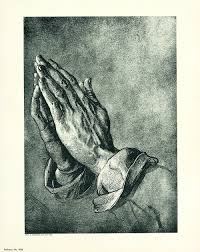
Not long thereafter, Durer returned to the apartment the two men shared to find his friend kneeling in prayer, his hands folded reverently.  Struck by the beauty of his friends hands, scarred and marked as they were by his labor of love, Durer was inspired to create what many consider his masterpiece – The Praying Hands – a tribute to his friend’s sacrifice.

In some way and in similar fashion, each of us has benefited from the sacrifices others have made on our behalf.  Each of us is indebted to others.  Each of us is called to respond.  

“Whatever there is of God and goodness in the universe, it must work itself out and express itself through us,” Einstein said.  “We cannot stand aside and let God do it.”

We are God’s hands.  Each of us holds the answer to someone’s prayers.

Posted in Inspiration | 1 Comment

What Does Love Require?

Most of our formal education is dedicated to the perfection of skills without considering their application.  For many people, including myself, the result is often a confusion of means and ends which first manifests itself when we graduate from school and find ourselves wondering if we really want to do what we are told we have been prepared to do.

As Martin Luther King said, “Every person must feel responsibility to discover his mission in life.”  For many people, this is a question we never ask until it is forced upon us.

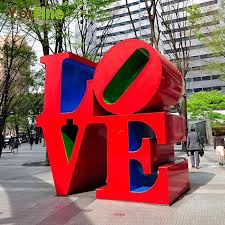
More often than not, direction can be found in response to a simple question.  If God is love, “What does Love require of you?”

You can begin to divine your mission in life by considering how your talents might prove useful to others.  The use of your talents to pursue your own interests is a dry hole – more than a meaningless exercise, a waste of your unique opportunity to change the world. 

What Love requires is that you listen with your heart and use the talent and skill you have been given to some good end, to do that which if you do not do will remain undone.  There is pride and dignity in any activity that helps.  There is satisfaction, joy, and fulfillment in any job worth doing. 

So long as what you do serves or contributes to the well being of others, as Mother Teresa says, it doesn’t matter what you do.  “What matters is the love you put into what you do.”   The most meaningful people in our lives do small acts with great love.

God has given each of us the capacity to achieve some end and the talent to serve some purpose.  No matter what you think you are prepared to do, no matter where you think your life should lead, there is no success, no satisfaction apart from this purpose. 

Each day you will meet indifference, ingratitude, disloyalty, dishonesty, greed, ill will, and selfishness.  A life of love requires we answer with honesty, integrity, compassion, good will, and selflessness.

Love requires you to be not less human but more human.  Love requires that we listen, not with our heads but with our hearts, and act – as God would act – with compassion for all living things.

Posted in Inspiration | 5 Comments

Ontology

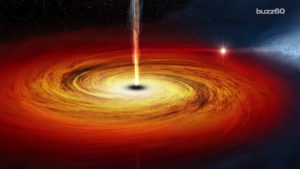
Like many others, I was fascinated by the discovery of black holes in space.  Though they can not be seen by the eye or directly measured with any known instruments, scientists concluded that black holes exist simply because the behavior of other stellar bodies told them that there had to be something there.  Something that could not be seen was influencing the behavior of everything that could be seen.

At almost the same time, physicists discovered a parallel behavior in the smallest bits of matter.  Ernest Rutherford’s experiments found the atom was relatively vacant.  Instead of the basic building blocks of matter anticipated by classical physics, Rutherford found the atom consists of vast regions of space in which extremely small particles move more or less at will. 

Quantum physics extended these finding with experiments that demonstrate that the particles within the atom are no more substantial than the atom itself.   There are no “solid” objects at any level.  Even the smallest bits of matter turn out to be abstract entities with aspects that change depending on why they are being examined and how we look at them.  Rather than being the detached and distant observers they were trained to be, scientists found themselves participating in every experiment, influencing the results with their expectations.

In other words, everything in the universe is affected by the behavior of everything else.  Everything that happens outside us happens inside us as well.  We are at once a being composed of millions of life forms, a part of the total body called humanity, and a cell in the universe. 

Experiment after experiment in the new physics has shown how one thing influences another across the boundaries of our seeming separateness.  The movement of the stars in the sky is identical to the movement of the atoms in our bodies.

Everything is relative.  Everything is related.  In the words of Sir Arthur Eddington, “When the electron vibrates, the universe shakes.”

The dismantling of the classical vision of the separateness of things confirms the understanding theologians have long held about the unity of life.  We have one relationship on earth.  That relationship is repeated in endless variety with everyone we meet and everything we see.  

God, man, and the universe are one indissoluble whole.

Posted in Inspiration | 4 Comments

‘Tis the Season

‘Tis the season to remember and celebrate the power of love. 

What is the one indispensable ingredient of life?

What is the most potent force in the universe?

How is God manifested in the world?

What is God’s greatest gift?

Where can we at once find the solution to the problems in our lives

and the problems of the world?  

We were created out of love to love and be loved.

Love is all we need.   

Posted in Inspiration | Leave a comment