The Action and Passion of Our Times

I chose not to attend my high school graduation ceremony, eager to head for Washington, D.C. where I had a summer job at the U. S. Senate.  Though it was not a conscious decision at the time, it is clear now I was making a clean break with my past.  I still think of the Rockies as home, but I never went back.

The separation was so complete I don’t remember – if I ever knew – who spoke to my graduating class.  Instead, I marked my transition to college and the real world by reading essays from Oliver Wendell Holmes, Jr.  This I remember clearly because one passage has always stayed with me and informed my life.

“As life is action and passion,” Holmes said, “it is required of a man that he should share the passion and action of his time, at peril of being judged not to have lived.”

Holmes’ observation came from the perspective of a civil war veteran injured three times in battle, a Harvard law professor, an Associate Justice of the U. S. Supreme Court for 30 years, and the oldest man to have ever served on the Court.  Clearly, he had “walked the talk” and lived “fully.”  I resolved to follow his example and embrace life.

A few years later, Doc English, my favorite teacher in law school, telegraphed another change of directions when he told me I probably would not make a good lawyer.  “You are smart enough,” he said, “but you have an overdeveloped sense of justice.”  It wasn’t meant as a compliment.

A Philadelphia lawyer with years of trial experience, Doc knew what he was talking about.  It took me several years, including a year clerking with a law firm, to figure out he was right.

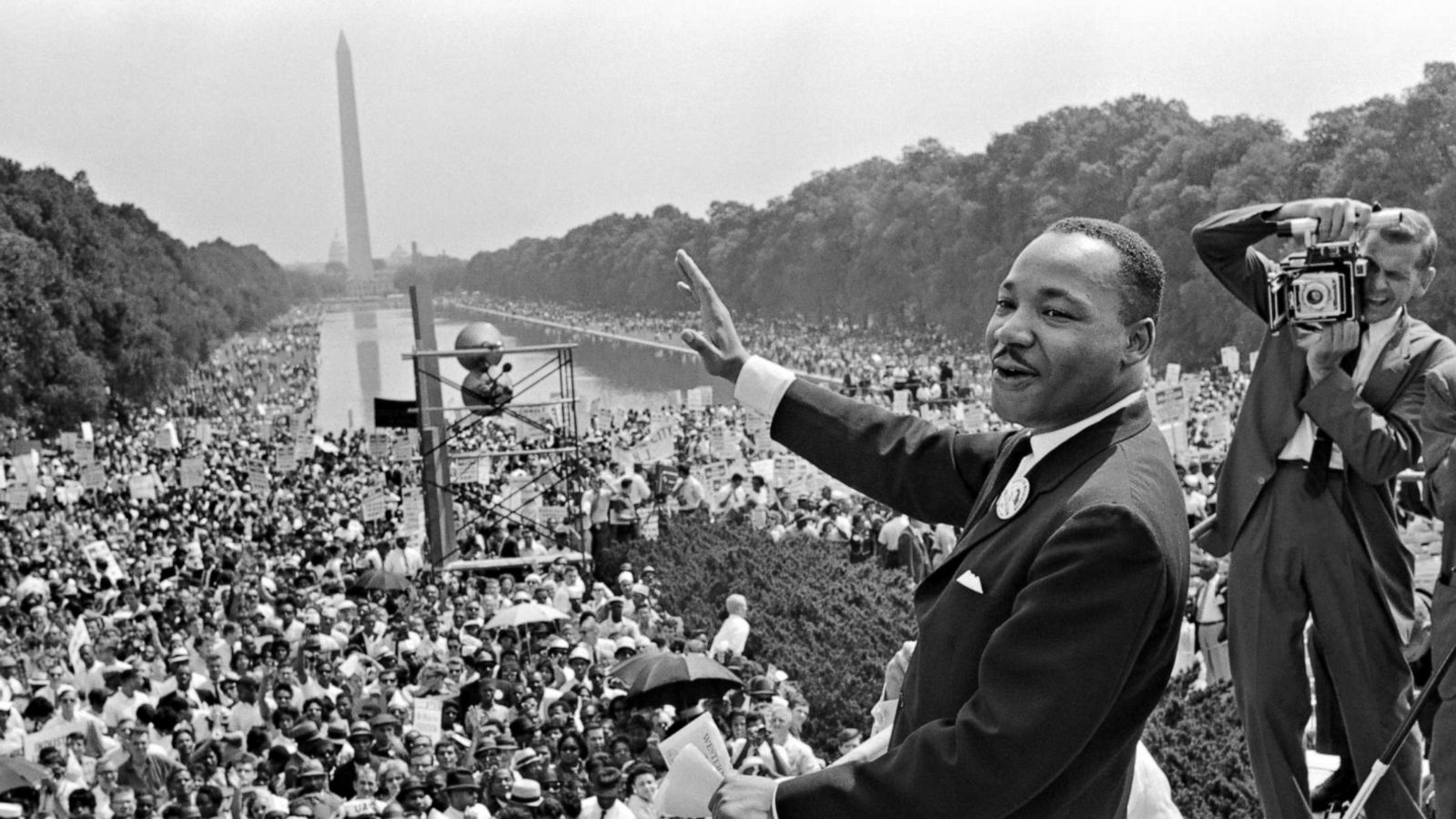
These things – my overdeveloped sense of justice and my desire to share in the action and passion of my time – led me to the Mall for the culmination of Dr. King’s March on Washington.  The March on Washington was an unprecedented event.  I wanted to show my support and be part of it.

The collective memory of this event focuses on Martin Luther King and his powerful words, but the moment wasn’t so defined at the time.  King was one 18 speakers assembled for the occasion.  All of them had something to say.  It took history to show us King said it best.

My strongest memory of the moment, then and now, was not what the speakers had to say but the spirit of the occasion.  Everyone there knew we were part of something important, something special and transcendent.   The silent witness provided by the peaceful presence of so many people seeking justice spoke eloquently to the collective conscience of America, challenging us to live up our ideals.

The other indelible memory of the event was that it was permeated by fear.  The potential for violence was almost palpable.  Embedded in all that and perhaps feeding it was the unstated understanding that things were changing.  For most people, particularly those who embraced this change, Dr. King was a hero, a prophet who signaled the direction.  But some saw him differently.

The Federal Bureau of Investigation (FBI) was concerned enough by the march and Dr. King’s speech to step up their investigations of the Southern Christian Leadership Council and target King specifically as an enemy of the State.  Speaking for the FBI, William C. Sullivan, head of Bureau’s intelligence operations, said, “We must mark him now, if we have not done so before, as the most dangerous Negro of the future in this Nation from the standpoint of communism, the Negro, and national security.   Prominent politicians lead by Senator Strom Thurmond were quick to agree and launched an attack on the March, labeling it Communist.

This animosity did not go away quickly.  When Dr. King was assassinated five years later, I was in law school.  I had just met my favorite law professor and was about to be drafted for Vietnam.  I watched as much of Washington went up in flames.  I remember seeing the smoke from the steps of the Capitol.  No one knew where it would lead or how it would end.

The elevator talk that day was all about Dr. King’s assassination and the tragic events it triggered.  On one of my runs, a passenger heard the discussion and held back.  After everyone else had cleared, he said, “It was about time somebody killed that son-of-a-bitch.”  In shock, I watched Senator Strom Thurmond walk off my elevator and head down the hall.

This Senator went on to be re-elected repeatedly. They named roads and buildings after him. Near the end of his career the entire Senate turned out to honor him at a dinner in the Capitol where people who should have known better hailed him as one of the Senate’s icons.

When I look back over the course of what is now fifty years, I see a lot of change. But I know a lot remains.  George Floyd made that clear.   

If anything, we are more divided now than then. At times like this, at times of turmoil, risk, and division, it’s worth remembering that America is always a work in progress and we must recognize that in the battle between love and hate, apathy is the enemy. 

If we truly want justice, if we want America to live up to her promise, if we stand with Dr. King and share his dream, we must make it happen.  We must be the change we seek.  Ultimately, America is and will always be whatever we are.

Posted in Inspiration | 1 Comment

The Lesson of the Season

      What is the indispensable ingredient of life?

What is the most potent force in the universe?

Where can we find the solution to all our personal problems?

Where can we find the solution to the problems of the world?

What is our greatest gift?

How is God manifested in our lives?

There is only one answer.  The answer is Love.

Such is the design of the universe, that the only way to have love is to give it.

It is the one thing we can never get enough of and the one thing we can never give enough of. 

For it is in loving and giving that we find the meaning and purpose for our lives. 

This is the lesson of the season; the lesson mankind has long been taught, but yet to fully learn.

We are here to love one another.

Posted in Inspiration | Leave a comment

The Spirit of Liberty

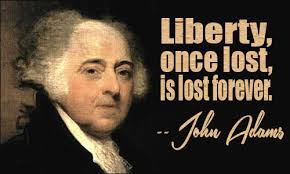
History remembers John Adams as our first Vice President and America’s second president. He was on the drafting committee for the Declaration of Independence and argued eloquently for its passage.  After July 4, 1776, Adams traveled to France, where he proved instrumental in winning French support for our war of independence.

So it is something more than ironic that twenty-five years later, Adams expressed concern for the viability of the Republic he helped create.

“Remember, democracy never lasts long,” he said, “it soon wastes, exhausts, and murders itself. There never was a democracy yet that did not commit suicide.”

I find myself wondering if this process has begun. With every passing day, our country seems more divided and, as we all know, a house divided against itself cannot stand.

If we are honest, most of us will admit we have friends or relatives whose political persuasions trouble us. Many of us “shut down” conversations with these people because we are uncomfortable with where these conversations might lead. We find ourselves wondering how these good and decent people could be so lost and misguided without considering the possibility that they might be looking back through the looking glass and wondering the same thing about us.

Anyone bothering to check knows that those who watch Fox’s news, the largest cable outlet, get a totally different view of the world than those who watch MSNBC, the second largest network. These networks and others present alternative universes. They have alternative concerns, alternative facts, and alternative realities, while the algorithms that govern the social media we use are designed to tell us what we want hear, reinforce our pre-existing beliefs, and present nothing that challenges them. No wonder half the population thinks the other half is crazy.

At its core, this behavior reflects a loss of our sense of humility – the most misunderstood and least appreciated Biblical virtue. It symptom of a potentially lethal combination of ignorance and arrogance.

In 1944, Judge Learned Hand, the most distinguished jurist of his time, spoke to more than a million people gathered in Central park. The event was billed as “I Am An American Day” and focused on the 150,000 newly naturalized citizens included in the audience.

“We have gathered here to affirm a faith,” Hand told them, “a faith in a common purpose, a common conviction, a common devotion. Some of us have chosen America as the land of our adoption; the rest have come from those who did the same.

“What do we mean when we say that first of all we seek liberty? Liberty lies in the hearts of men and women; when it dies there, no constitution, no law, no court can even do much to help it. While it lies there, it needs no constitution, no law, no court to save it.

“And what is this liberty which must lie in the hearts of men and women? It is not the ruthless, the unbridled will; it is not freedom to do as one likes. That is the denial of liberty, and leads straight to its overthrow. A society in which men recognize no check upon their freedom soon becomes a society where freedom is the possession of only a savage few; as we have learned to our sorrow.

“What then is the spirit of liberty? I cannot define it; I can only tell you my own faith.

“The spirit of liberty is the spirit which is not too sure that it is right; the spirit of liberty is the spirit which seeks to understand the mind of other men and women; the spirit of liberty is the spirit which weighs their interests alongside its own without bias; the spirit of liberty remembers that not even a sparrow falls to earth unheeded; the spirit of liberty is the spirit of Him who, near two thousand years ago, taught mankind that lesson it has never learned but never quite forgotten; that there may be a kingdom where the least shall be heard and considered side by side with the greatest.”

That is our challenge. If our democracy is to survive, the spirit of liberty must be kept alive.   It’s not something anyone can do for us. It is something we must do for ourselves.

Posted in Inspiration | 4 Comments

Thanksgiving

It’s been a tough year. It’s hard to get passed the daily barrage of disasters we hear on the news. It sometimes seems like our country is coming apart and all is lost.

At times like this, it is important for us to remember who we are and what we believe.

I believe:

  • …that love is stronger than hate.
  • …that faith is stronger than fear.
  • …that hope is stronger than despair.
  • …that mankind is indivisible.
  • …that we get what we give.
  • …that you cannot help another without helping yourself.
  • …that you cannot hurt another without hurting yourself.
  • …that the better angels of our nature will always rise.
  • …and that it only takes a single ray of light to penetrate the dark.

So, with that in mind, the question as always becomes: What are we going to do about it? How do we deal with the challenges we face.

  • For my part, I know that while I cannot do everything, I can do something.
  • I will not let the fact I can’t do everything keep me from doing the something I can.
  • I can touch one.  
  • I can teach one.  
  • I can heal one.
  • I can speak truth to power.
  • I can be an instrument of peace.
  • I can be a light in the darkness.

As we approach the New Year, let us go forth remembering, in the words of Anne Frank, that, “In the long run, the sharpest weapon of all is a kind and gentle spirit. Where there’s hope, there’s life. It fills us with fresh courage and makes us strong again. Whoever is happy will make others happy.”

Happy Thanksgiving!

Posted in Inspiration | 4 Comments

Write It On An Ice Cube

My father had Black Lung, the Coal Miner’s disease, causing his health to deteriorate progressively through the years.  The degeneration of his lungs put an increasing strain on his heart.  Heart problems were followed by kidney problems, kidney problems by diabetes.  It was as though his bodily systems were failing, one by one.

Then in the spring of l988, Dad developed cataracts and had to go in for surgery.  The operation on the first eye went well, but the second did not.  As he waited for things to heal enough to allow corrective surgery, he grew increasingly frustrated an angry.  His body had been betraying him for years.  This was the final insult. 

During that time, it seemed there was little he could do other than aggravate my mom.  Unable to work and uninterested in TV, Dad spent much of his time looking through the mail order catalogs that poured into the house.  Dad called them his “wish books.”  He examined each one that arrived in detail, thumbing through them for hours.

Watching this activity, day after day, and trying to guess why he seemed so preoccupied with something so trivial, frustrated my mother even more.  Her frustration was compounded whenever she asked him what he was doing.  “I am just looking,” Dad always responded defensively.  “Can’t I look?”

It seemed like a small thing in the midst of some many other things; but it grew to be the source of the greatest friction I ever saw between my parents.  Finally, it got so bad my brother and I felt we had to give mom a break.  We agreed he would take her to Hawaii on a mini vacation, while I stayed with dad and took care of him.

Almost as soon as we returned from taking them to the airport, Dad pulled out one his wish books.  “I have been looking for a ring like this,” he said, “and I need your help.”

Dad explained that when they were married he could not afford to buy my mother an engagement ring, but he had promised her that someday he would.  Their 45th anniversary was approaching.  In anticipation of that event, he had been searching for the perfect ring and a way to make good on his promise.

The ring had to have thirteen stones, Dad said, because they were married on July 13.  For the same reason, he wanted the center stone to be a ruby, the birthstone for July, flanked by a smaller ruby and by five diamonds on each side.  After months of looking, he said he thought he had finally found what he wanted in one of the catalogues.  He asked me to drive him to the store so that he could see it.

We did as Dad wanted, but the ring he had seen advertised was disappointing.  The stones were small and of poor quality.  There were some other nice rings in the store, but they did match the image he had in his mind and were priced well beyond his means.

Much of the week Mom was gone, we shopped for the ring he wanted without success.  My father was reluctant to give up but the time for her return was rapidly approaching.  To put his mind at ease, I assured him that I knew what he wanted and would keep looking until I found it.  Dad seemed satisfied with that, but he made me promise I would give him the bill.

With that I went to a jeweler in downtown Washington and told him I wanted him to make a ring for me.  We picked out the stones and agreed on the price.  Then I told him why I wanted the ring and asked for a favor.  I said I would pay his price, but I wanted two invoices – one for the full amount, the other made out in the amount my father hoped to pay.

The jeweler was happy to comply, and Dad was delighted with ring.  He was even more pleased when he saw Mom’s reaction to her anniversary ring and her appreciation of the thought and great love that had gone into its purchase.

My father passed away five months later.  My mother followed him in eighteen months.  Neither one of them ever knew what I had done.  While I have done many more things with my life than I would have thought possible, nothing gives me more satisfaction than this.  When you do something good, write it on an ice cube.

Posted in Inspiration | 14 Comments