Chickens Come Home To Roost

lpcartworkfinal2smallUncle Jim was the black sheep of our family.  He conned my father out of his life’s savings, bilked friends, and swindled strangers in a seemingly endless series of get-rich-quick schemes.

As a boy, I remember being increasingly embarrassed every time his name came up.  While the family stood by him, I know they all felt the same way.  My father took it hardest.  He carried the hurt of his brother’s betrayal and dishonesty for years.

It was sad and difficult to watch, but sadder still was the way my Uncle died.  He died alone in a rundown boarding home miles from home.  By this time, he had so isolated himself with his unrelenting selfishness that he was dead two weeks before anyone knew he was gone.

Jim always thought that if he had money he would have everything, but his unbridled ambition cost him everything that mattered.  He always thought someone else could be conned into paying the bill, but he should have known better.  His mother, my grandmother, often reminded all of us “chickens always come to roost.”  Our seemingly independent lives are rooted together beneath the surface and tied to a common source.  By necessity, each life is bound to help every other life linked to it.  We cannot close others out without shutting ourselves in.

I often wonder if my uncle ever really thought about what he was doing.  If so, how could he not know that wealth will not bring happiness?  There is abundant evidence of that fact.  Napoleon, for example, at one time one of the richest and most powerful men on earth, wrote in his diary that he had only experienced five days of happiness in his entire life.

Goodness always precedes greatness.  Happiness comes from serving the purpose for which we are intended, fulfilling our potential, and, in so doing, finding God’s will for us.  In the final analysis, the measure of a man is not how many servants he has, but how many people he serves.  Happiness comes from serving others, not from having others serve you.

Posted in Inspiration | 1 Comment

Lessons From A Boy Without A Brain

9622_149713652844_3507864_nOne of the most remarkable people I have ever met was Benjamin Rossow.  Ben was one of Rachel’s kids (Forget Yourself below) and of all her children perhaps the most challenged.  Born without a brain, all he had was the cerebral cortex – a brain stem – to guide his actions.

The potential quality of Ben’s life and the possibilities of his birth were judged so limited, the men of medicine who brought him into the world concluded there was no point to his life.  A boy without a brain would never run with a football, grow up to be a doctor or a lawyer, or contribute in any meaningful way.  He would never walk or talk or have any hope of sustaining himself.  Besides, they said, it was unlikely he would live more than year under the best of circumstances.  They decided the best thing to do was to just let him go.

They never asked Ben, of course, and if they had he could not have answered.  But fortunately, Rachel answered for him and took him home to be part of her remarkable family.

When I met Ben a dozen years later, I saw him respond in ways doctors said would not be possible when he was born and still cannot explain.   Benjamin tracked his mother with his eyes, responded to her embrace, and laughed when she laughed.  He not only knew who she was, he knew where she was all the time

More than that, I came to understand Ben was a pure person.  He knew nothing of prejudice, never learned to hate, and never even dreamed of harming another person.  All he knew was love – the love he was given and the love he gave – and that love enabled the child who it was said would never make a difference to change the Baby Doe laws in three states.

Most of us live with doubts that inhibit our actions.  Our fears often create failure and a list of unrealized possibilities filed under what-might-have-been.  Benjamin, on the other hand, never knew doubt and had no fear.  As a result, while most of us use only a fraction of our potential he was performing at least at l50 percent of what was said to be his capacity.

Simply stated, the basic principle of evolution is that what is used develops.  Birds fly not because they have wings; they have wings because they fly.  The overarching lesson of Ben’s life is that it is not our impossibilities that fill us with despair, but rather the possibilities we have failed to actualize.  The greatest defeat we can suffer is the distance between what we are and what we can be.

Posted in Inspiration | 1 Comment

Trinity

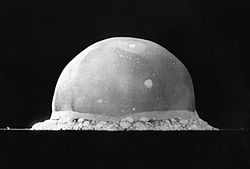
250px-Trinity_Test_Fireball_16msOn this day in l945, Trinity, the first nuclear device, was detonated in the New Mexico desert 120 miles south of Santa Fe.  From a distance of 10,000 yards, scientists observed as a mushroom shaped cloud of searing light stretched 40,000 feet into the air, generating a destructive power equivalent to 20,000 tons of TNT.

It was the beginning of the Atomic Age.

Science teaches us – and this test demonstrated – that matter can neither be created nor destroyed.  Something cannot become nothing.  “It’s all energy,” Einstein explained.

In accepting the Nobel Prize, Sir James Jean extended Einstein’s observation this way.  “The more we look at particles on the sub-atomic level,” he said, “the more we see processes and the less we see things.”

Until that time it was widely held that everything was finite, and that, as such, any one thing could be separated from every other thing.  The dismantling of this classical vision of separateness confirmed the understanding theologians had long held about the unity of life.

Every thing, every one is related.  We are bound together by love.

Love is the most powerful force on earth, the manifestation of God in you, and the center of your relationship with others.  It is how we participate with God in His purposes for mankind.

The power of the atom bomb pales by comparison.

Posted in Inspiration | 1 Comment

Nelson Mandela and the Declaration of Independence

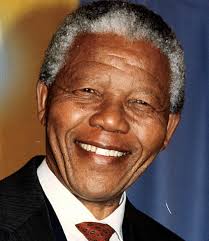
imgresThe Declaration of Independence was adopted two days after the Second Continental Congress approved the legal separation of the Thirteen Colonies from Great Britain.  The document was intended to be a formal statement detailing the reasons for the separation but it did much more than that, laying the foundation for the government that would follow.

The preamble to the Declaration contains some of the most significant and memorable words in the English language:  We hold these truths to be self-evident, that all men are created equal, that they are endowed by their Creator with certain unalienable Rights, that among these are Life, Liberty, and the pursuit of Happiness. 

This one sentence changed the world.  It conveyed the promise of America, a commitment to a society with a people representational of all aspects of humanity liberated to find the fullest expression of their hopes and dreams.  It established America as an ideal to cherish and a dream to pursue.

The Declaration of Independence also foreshadowed the preamble to the Constitution of the United States with its proud declaration of power and claim of responsibility –  “We the people of the United States.”  We are the architects of our government, it says.  We will determine the nature of our society.  We – the people – are in control.  The world had never seen anything like it before.

The seeds planted in Philadelphia in l776 have spread across globe.  Some have fallen on fertile ground, where they were nurtured and warmly embraced.  Others have blossomed in barren and forbidding places, forcing their way up through concrete resistance and cracking walls of oppression – bringing down the Berlin wall, liberating Poland, and, most vividly and dramatically in our time, ending apartheid in South Africa.

You can hear the echo of the Declaration of Independence in Nelson Mandela’s 1994 inaugural address.  “We ask ourselves, who am I to be brilliant, gorgeous, talented and fabulous?” he said, quoting Marianne Williamson.  “Actually, who are you not to be?  You are a child of God…We are born to make manifest the glory of God that is within us.  It is not just in some of us; it is in everyone.”

You can see it in the precedent Mandela set by following in Washington’s footsteps, walking away when he could easily have been President for life, choosing principle over power.  You see it again in his generosity of spirit, the way he replaced separation with inclusion, racial hate with color blind kindness, antagonism and division with understanding and reconciliation.  Proof yet again that big things from small seeds grow.

The day after formal vote for separation and the day before the Declaration of Independence was adopted, John Adams wrote his wife.  He said, “It ought to be commemorated as the day of deliverance, by solemn acts of devotion to God Almighty and solemnized with pomp and parade, with shows, games, sports, guns, bells, bonfires, and illuminations, from one end of this continent to the other, from this time forward forever more.”

It has and it should – forever more.  Happy Independence Day!

Posted in Inspiration | Leave a comment

Billy Shore’s Solution

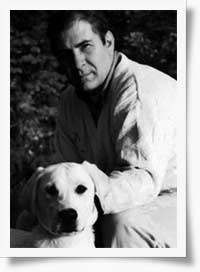
UnknownThere is a question in every problem we perceive.  For Billy Shore, it was embedded in a news report of a famine in a distant land.  The headline said: “200,000 to Die this Summer in Ethiopia.”

“The calamity had not yet struck; the experts could see it coming, but they could also see that nothing was going to be done to stop it,” Billy recalls. “To me, the newspaper story read like an invitation to act.”

Almost immediately, Billy’s impulse blossomed into a charity known as Share Our Strength.  Since it was created in the Fall of l984, Share Our Strength has raised more than $376 million to fight hunger.  Recently, Share Our Strength launched “The No Kid Hungry” campaign – an ambitious effort to end childhood hunger in America that has already helped bring more than 34 million additional meals to kids who need them.

“It takes more than food to end hunger,” Billy says.  “Without a doubt our greatest challenge is to make people care about alleviating the effects of poverty, to make them want to do something about it in the first place, and to make them feel that they can.”

Most of us, I suspect, can relate to Billy’s story.  How often, as we listen to the evening news or talk to friends, do we discover something that troubles our souls and offends our sense of justice?

Against our will and almost without thought, we are tempted to ask how God could let this happen.  We are like the mystic who, deep in prayer, considered the poor, the hungry and homeless, and cried out, “Oh Lord, I know you are a loving God but how can you permit these evils to exist and do nothing to help these suffering people?”  In the silence of the heart came the answer.  “I have done something about them.  I made you.”

The most persistent question in life is – “What are you going to do about it?  Like Billy Shore, we must find the courage to listen to our goodness and act on it.

Posted in Inspiration | 1 Comment