
The Spirit of Liberty

Edward Everett – not Lincoln – delivered the Gettysburg Address.

Everett was a pastor and a politician who served as a Representative, Senator, Governor, and Secretary of State.  He also served as President of Harvard University.  He was 69 years old and known for his oratory.

It was four and a half months after the Union armies defeated the Confederacy at the Battle of Gettysburg.   Through the summer, General Lee had pushed northward into Pennsylvania. General Mead and the Union Army met him at Gettysburg on the 1st of July. They fought for three days.

When it was over, the battlefield was strewn with more than 50,000 bodies. To put it in perspective, nearly as many Americans died at Gettysburg in this one battle than in the totality of the ten years we were engaged in the Vietnam War.

Twenty thousand people gathered for the dedication of the Soldiers’ National Cemetery in Gettysburg, Pennsylvania on November 19, 1863.  After a prayer, Everett spoke for two hours, delivering a 13,607–word oration.

Lincoln was invited to be present at the last moment. The words of his invitation were explicit: “It is the desire that, after the Oration, you, as Chief Executive of the nation, formally set apart these grounds to their sacred use by a few appropriate remarks.”

Lincoln felt no slight and took no offense. He wanted to be there and meant to use this opportunity.  He spoke for two minutes and in those two minutes transformed Gettysburg from a battlefield into a symbol of national purpose, pride, and ideals. It only took him 272 words.

In a letter to Lincoln written the following day, Everett praised the President, saying, “I should be glad if I could flatter myself that I came as near to the central idea of the occasion, in two hours, as you did in two minutes.”

“Four score and seven years ago,” Lincoln famously began, “our fathers brought forth on this continent, a new nation, conceived in Liberty, and dedicated to the proposition that all men are created equal.”

In so doing, Lincoln reiterated the fundamental principles of the Declaration of Independence. He followed by proclaiming “a new birth of freedom” that would bring true equality to all of its citizens.  In other words, Lincoln redefined the Civil War as a struggle not just for the Union, but also for the principle of human equality.

A hundred and fifty four years later, we still struggle.  The two great founding principles of our nation – liberty and equality – are said to be in opposition and Lincoln’s challenge remains.  We can’t help wondering how “any nation so conceived and so dedicated, can long endure.”

The best way to navigate these troubled waters is to remember where we began.

In a speech to his fellow Puritan colonists in 1630, John Winthrop set the direction for our nation by defining the vision for the society he hoped to establish in the new world.  “All true Christians are of one body in Christ,” he said; “the ligaments of this body which knit together are love.  All parts of the body being thus united…in a special relation as they partake of each others’ strength and infirmity, joy, and sorrow…If one member suffers, all suffer with it; if one be in honor, all rejoice in it.”

“We must be knit together in this work as one man,” Winthrop warned.  “We must entertain each other in brotherly affection.  We must be willing to abridge ourselves of our superfluities, for the supply of other’s necessities…For we must consider that we shall be as a City on a Hill. The eyes of all people are upon us.”

This is a large part of what makes the United States unique in the history of the world. America is the only nation composed of people drawn from another place.  It is the only nation whose people are not connected by blood, race, culture, or original language.

The differences between us are many, but we are united by the ability to see ourselves in others and the understanding that the most selfish thing we can do is to be selfless.  One cannot succeed without another.  Our true interest is a mutual interest.

Three years after Gettysburg, Senator Charles Sumner, in his eulogy for the slain President, said Lincoln was mistaken that “the world will little note, nor long remember what we say here.” Rather, Sumner remarked, “The world noted at once what he said, and will never cease to remember it. The battle itself was less important than the speech.”

Sumner was right.  Consider this.

Up to the Civil War “the United States” was invariably a plural noun:  “The United States are a free country.”  After Gettysburg it became singular: “The United States is a free country.”

At Gettysburg, Lincoln transformed the union from a mystical hope to a constitutional reality.  He saw beyond the moment to the spirit of America.

As we are now daily reminded, the battle continues.
Posted in Inspiration | 1 Comment

Discovering Truth


Jefferson said, “Error of opinion may be tolerated where reason is left free to combat it.”  There has never been a time when we as a country have had to contend with so much of one with so little of the other.

That’s saying a lot when you consider the context of the times.  Hard as it may be to believe given his exalted position in our panoply of heroes, Jefferson’s observation came at the conclusion of the most contentious presidential election in our nation’s history.

On December 3, 1800, the College of Electors began the turmoil when they met to cast their ballots for president.  The result was a tie between Thomas Jefferson and Aaron Burr.  That required the election be decided by the House of Representatives.  

In the House – then as too often now – party, personal animosity, and partisanship reared its ugly head.  Election by the House of Representatives requires a vote by delegation.  This procedure provided ample opportunity for personal politicking, bribing, cajoling, arm-twisting, promising, and threatening members as state delegations struggled for the consensus required before casting their one vote for the candidate of their choice. 

There were thirty-six ballots before the election was decided.  Members of the Federalist-controlled Sixth Congress battled for weeks, debating the merits of their two options – Thomas Jefferson or the equally unpalatable Aaron Burr. 

When it was over, Jefferson was acutely aware he owed his victory not to his own Republican party but instead to the backstage maneuvering and horse-trading by the members of the opposition – the Federalist party.  Aside from everything else, his election marked the first peaceful transition of power between the two political parties.

On Wednesday, March 4, 1801, at the conclusion of this process, Jefferson was given the oath of office by Federalist Chief Justice, John Marshall, and delivered an inaugural address acknowledging the political divisions he faced.  

Jefferson called upon people everywhere to unite in common efforts for the common good and to obey the constitution, remembering, “Every difference of opinion is not a difference of principle.”

“We have been called by different names,” he said, “but we are brethren of the same principle.  We are all republicans: we are all federalists…Let us, unite with one heart and one mind.  Let us restore to social intercourse that harmony and affection without which liberty and even life itself are but dreary things.”

Jefferson’s call for unity, harmony, and affection now seems distant and forgotten.  We are increasingly buried in disharmony, misinformation, and a cacophony of lies.  Truth, always elusive, has become difficult to discern. 

We are being pulled apart, polarized and overwhelmed with diverse opinions, information, facts, theories, rumors and all kinds of commentary portrayed as fact, including blatantly fake news.  For truth-seekers, it can seem a dauting and overwhelming task.

Tim Love, a man who has taken a deep dive into the challenges surrounding discerning truth, offers some guidance and assistance.  Tim is the former Vice-Chairman of Omnicom Group, the leading worldwide advertising and marketing services company, a truth-seeker by nature, training, and discipline. 

Love’s fascination with discovering truth in our modern age began with an awareness that social media platforms have become the primary source of news and other information for the majority of Americans, while the content on these platforms has never been subject to the same standards of truthfulness and non-misleading content as traditional media channels.

“A lot of people don’t consider the kind of information sent by friends in an email to be social media,” Love says. “Actually, it is. Social media is more than apps and platforms like Facebook, Instagram, TikTok, and the like. The content they receive via email is social media because the content is directed to them, based on their interests and behavior express in how they communicate using the internet.”

Blame it on technology, political polarization, foreign actors, or fast-buck artists but understand and accept the fact that we are being attacked by unfiltered information on our unfettered social media highways.  It is constant, consistent, and premeditated.  The first challenge is to be vigilante and aware it’s happening.

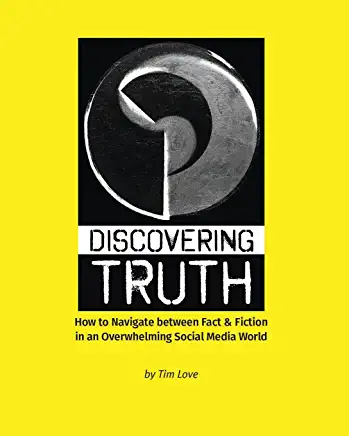
Love’s interest in “Discovering Truth”, led to a popular podcast series, which examines the difficulty of determining truth in a world of heightened social media output, unfettered political propaganda, foreign and domestic extremist content, hacks and lies.  A book, just released, Discovering Truth:  How to Navigate Between Fact & Fiction in an Overwhelming Social Media World, evolved from these podcasts. 

I don’t often recommend books in this forum, but I highly recommend this one.  It’s an insight-filled exploration of the role of media in communications and how today’s social media affects trust in institutions and divides an increasingly polarized society. 

Tim Love, the author, is not a politician though his producer has suggested he consider running for president – a thought I would readily endorse.  He is a dedicated and insightful man with a 42-year career in the advertising industry which provided extensive global brand-building experience with some of the world’s largest and most reputable advertisers while giving him first-hand experience with consumers in over 100 countries. 

Tim begins where Jefferson ended.  “It is a melancholy truth, that a suppression of the press could not more completely deprive the nation of it’s benefits, than is done by it’s abandoned prostitution to falsehood,” Jefferson wrote near the end of his second term.   “Nothing can now be believed which is seen in a newspaper.  Truth itself becomes suspicious by being put into that polluted vehicle.” 

All the more reason to question and discern truth.

Posted in Inspiration | Leave a comment

The Answer

What is the one indispensable ingredient of life?

What is the most potent force in the universe?

What is God’s greatest gift?

How is God is manifested in the world?

Where can we find the solution to all the problems we face?

There is only one answer, one hope and possibility.

The answer is Love.

Love is the one thing you can never get enough of.

Love is the one thing you can never give enough of.

We receive love not in proportion to our power, possessions, or position in life, nor in correlation to our needs and desires, but only in proportion to our own capacity to love.

The only way to have love is to give it.

No matter what the problem is the answer will always be found when we surround it with love.

Thus it is that in loving and giving we find the meaning and purpose for our lives.

All we really need is love. There is no greater gift.

Happy Thanksgiving!

Posted in Inspiration | 2 Comments

The Dogs of Division

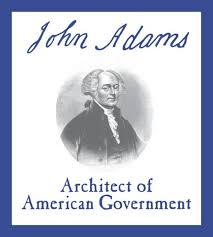
“Remember, democracy never lasts long,” John Adams, America’s second president, wrote.  “It soon wastes, exhausts, and murders itself.  There never was a democracy yet that did not commit suicide.”

I can’t help wondering if this process has begun and what, if anything, we can do to turn it around.

This comes from one who has spent his lifetime serving this country – in the military, at the U. S. Senate, and in the community through various charities and books written to teach and promote the values at the heart of America. 

Now, despite my best efforts, I fear all is lost.  The dogs of division have been released and are running wild.  The unthinkable seems almost inevitable.

My concern comes from watching what’s happening around us, the daily drumbeat of disasters on the news, and thinking about them in the context of lessons I learned from two survivors of the holocaust – two people who were dear to me:  Viktor Frankl and Henri Landwirth.

At the time, I didn’t see how the horrors they lived through could ever be repeated here.  It is increasingly clear we ignore that possibility at our peril. 

Gregory Stanton, the founder of Genocide Watch, has identified the stages that can cause decent people to commit indecent acts.  He says it starts when a one group defines another as “the other.”  “They” are said to threaten “our” interests.  Discrimination and dehumanization follow, eroding the in-group’s empathy for the other group.

This leads to increased polarization and the belief that – “You are either with us or against us.”  Then true believers are asked to demonstrate their commitment.  “Enemies” are identified.  Leaders of the opposition are targeted.  Death lists are made.  Weapons are stockpiled.  Physical segregation is enforced.  “We” don’t want to live anywhere near “them,” the in-group says.  The out-group is forced into ghettos or concentration camps.  There they are easily targeted, and the massacres and mass murders can begin.

We are not there at the moment; but we are not far from there.  You can see it bubbling up on the streets, seeping up through the sidewalk, and in the great undercurrents and tides of hate flowing back and forth just below the surface.

Let me be clear.  This is not about one side or the other.  For those who may think I am talking to the left or the right, get over it.  A reaction of that nature is just one more manifestation of how divided we have become.  It’s not about “them.”  It’s about us.

No one is exempt.  We all have to recognize our responsibility for the world we are living in.

Take a moment and consider that.  Have you ever seen our society so polarized?  Have you lost friends for political reasons?  Are there people you used to talk to that you now avoid?  When your family and friends gather are there places you just don’t go?  Do you get your information from a single source, or can you switch channels back and forth without getting aggravated by what you hear?

It’s hard to tell whether the acrimony we see in our political system is a cause or an effect.  What is clear is that each side of the political divide believes the other side is evil.  Both sides see the coming election as existential.  Neither side believes it can live with other side’s success.  If the election is close, neither side will accept the outcome without question. 

Inevitably, in that case, the divide will become larger and deeper.  This is a recipe for disaster.  It will take us to a dark place the likes of which we have never seen in our country’s history.

But there is a light in the darkness.  It begins with the recognition that we have a choice, that America is more “bottom up” than “top down”, and that this country will be whatever we are. 

The responsibility is ours, not theirs.  The solution to all the problems we see on the national level starts locally on the personal level with our love and respect for each other, the acceptance of those with differing views, and our denial of the forces that would separate and divide us from one another.  

Posted in Inspiration | 2 Comments

The Face of Evil

When I was young, I had a running argument with my father. Dad was a simple, straightforward man with firm principles and unyielding values. He believed in hard work and straight talk. There were no shades of grey in Dad’s world. Right was right. Wrong was wrong. There was nothing in between.

To my young eyes, my father was a too rigid. I tried my best to make my case, telling him things were never that simple. Good and evil were antiquated concepts out of the Old Testament, untethered from the day-to-day reality of our modern lives. Like any budding lawyer, I knew there were always extenuating circumstances.

It took a while for me to realize I was wrong. I came to that understanding about the same time I realized I didn’t want to be a lawyer. Instead, I immersed myself in the well of goodness that is at the heart of American and surrounding myself with the best people I could find.

Forty years later, I know that is the best decision I ever made. The best thing about my life is the quality of my friends. I am truly blessed.

While I have encountered my share of bad actors along the way – and even investigated a few while I was working for the Senate – I have never seen the face of pure evil until now.

Until now, my experience with evil was always second hand, coming largely from conversations with friends mentors who had seen the face of evil up close. Two of these people, Viktor Frankl and Henri Landwirth, were among the most important men in my life.

Henri and Viktor were both survivors of the holocaust. Through the years, we talked extensively about their experiences in the concentration camps – virtually every time we were together. I pressed these conversations in large part because I was having such a hard time getting my head around the reality of horrors they experienced. How could people treat other people that way? Even now, it is difficult to believe human beings are capable of such atrocities.

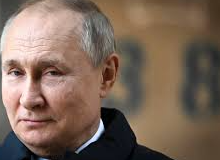
Thanks to Mr. Putin that is no longer is in doubt. Now, for the first time in our lives many of us are confronted with the reality of evil on a massive scale. Now we see it. It is inescapable. Now we know. It is there before us in the all too vivid images on our television screens every moment of the day, every day of the week, every image more horrid, more heartbreaking that the last. We don’t want to see it, but we can’t look away.

Evil is no longer abstract, supernatural, and distant, divorced from our everyday lives. We now know evil has a human face. One man, for his own reasons or no reason at all, has unleashed the Four Horsemen of the Apocalypse – conquest, war, famine, and death. The stain he leaves dishonors the Russian people and now permeates every segment of our existence.

For those who have been inclined to make excuses for President Putin in the past, let this be the end of that. The mask has been removed. We see him for what he is. If there was any doubt before, we now know there is a monster among us.

But that knowledge is not enough. We must understand where it leads. We must understand there is nothing this man will not do. The lives of other people mean nothing to him. He will not be dissuaded from continuing to crush civilian centers. He will not stop tearing lives apart and killing women and children.

We must understand such evil will not be restrained. It has no limits. Putin will not be deterred from using chemical weapons or even nuclear power by the universal condemnation it would bring. He is a pariah – in the world but not of the world. He could care less what we think.

The hard truth is that the only restraint on Putin is the knowledge that if he uses nuclear power, nuclear power will be used on him and targeted at him. Millions will perish, if it comes to that, but inescapably he knows he will be among them.

For Viktor Frankl, one of the benefits – if you can call it that – of living through the holocaust was the opportunity to prove his mentor, Sigmund Freud, wrong. Freud wrote and believed that under extreme stress and peril human beings would all revert to basic instincts.

“Freud was spared the concentration camps,” Viktor told me. “But those of us who were there saw diversity not uniformity. People revealed their true selves – the saints and the swine.”

Outgunned and outmanned, here is where the Ukrainian people have the advantage. People will admire their courage, dignity, and honor long after Putin has faded from the world stage.

We will remember the compassion of Ukraine’s neighbors.

We will remember the way a divided world has come together in response to Putin’s atrocities.

We will remember the way hundreds of thousands have responded to one man’s evil intent.

We will remember their love and kindness.

We will ever be reminded that even though evil has a human face, so do empathy, mercy, courage, and compassion.

The great overarching lesson in all this is that the worst of us reveals the best of us.

Posted in Inspiration | 7 Comments