The Circle of Life


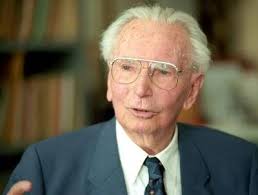
imagesViktor Frankl was the founder of Logotherapy and the author of 32 books, including Man’s Search for Meaning, identified by the Library of Congress as one of the ten most influential books in the English language.

After reading Man’s Search for Meaning, I sent Dr. Frankl a letter expressing my admiration.  I told him I had stumbled on his book after an extensive period of soul-searching and that I wished I had found it earlier.

Man’s Search for Meaning had a profound impact on me and I told him so. To my surprise, Dr. Frankl answered my letter with a personal note raising questions which encouraged a response.  With that beginning, we exchanged letters for some time until I found an opportunity to invite him to come to America and keynote a conference I was helping to organize.

We met at the airport and I must have peppered him with a hundred questions as we drove to town.  We had an early dinner that evening and said goodnight.  The next morning, Viktor gave a stirring speech, receiving a standing ovation from the three thousand people attending the conference.

After lunch, I walked him back to his room and thanked him for making the long journey from Vienna for one speech.  I said good-bye not knowing when, if ever, I would see him again.

Early the next morning, the phone rang at my home. When I answered, I heard Viktor’s voice.  He said his return flight did not leave until late in the day and he was wondering if I would I mind coming to his hotel and spending some time with him.

We spent the entire day together and though nothing explicit was said, I could tell he was “working on me.”   Viktor had clearly thought about the questions I had asked the night before and was trying to extend my thinking.

Over the next few years, Viktor would periodically send me the text of something he was working on and ask what I thought.  The question was always phrased as though he was seeking my opinion, but I came to know it was just one more way of extending our dialogue.

One of the last things he sent me contained a portion of a chapter he was preparing for his biography. There was little Viktor left to chance and I expect there was no chance in this.

The text described his relationship with Freud.  As a young man, Frankl said he was so eager to meet this great man that he staked out a park in Vienna that he was said to frequent, hoping to see him.  Finally, his effort was blessed with success and he was bold enough to make an approach.  He described Freud as gracious, patient, and generous.  At the conclusion of their conversation Freud was kind enough to invite Frankl to send him some of his work to review.

“Before long,” Viktor wrote, “I was corresponding with Freud on a regular basis, sending him anything I thought would interest him.  He promptly answered every letter and was responsible for publishing my first treatise on psychotherapy.”

With this I came to understand the circle of life. The only way to repay those whose footsteps we follow is by helping those whose footsteps follow our own. When we are engaged in helping others, we are not so much conferring favors as canceling debts.
Posted in Inspiration | 5 Comments

What Are You Going to Do About It?

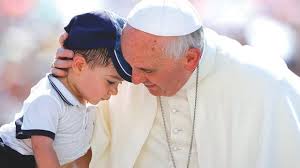
imagesLike many others, I have been profoundly moved by the Pope’s visit to America this week. What a great and Godly man.

His homily in Philadelphia today reminded me of a meeting I had with Peter Grace some twenty-five years ago. At the time of our meeting, Peter was in his nineties. He had been a CEO longer than any man in corporate history.

The grandson of the founder of W. R. Grace, Peter had taken the helm of the billion-dollar company while still in his thirties and carried the scars of some fifty years on the public stage. Grace had been lionized and vilified, praised for his visionary leadership and denounced for his aggressive business tactics. Respected, loved, and feared by his peers, few in corporate America had as much power.

To all appearances, Peter’s life was an open book. Yet, the more I learned about the man the more I found that like an iceberg the best part of him was concealed from public view. He was the leader of an ancient order called the Knights of Malta, a group dedicated to living an exemplary Christian life. He led and directed good works all around the world.

When I asked him to tell me the greatest lesson of his life, Peter said that as a boy he was tutored by Father James Keller, founder of The Christophers.

“Whenever I came to him to describe some great horror I had heard about or some injustice in the world, Father Keller’s response was always the same,” Peter said.

“As I finished describing whatever caused my concern, he would say — ‘Well, what are you going to do about it?”

This is the most persistent question in life. As Pope Francis reminds us, the crying of a child, the homeless man on the street, the neighbor in distress are all questions to which we must respond.

Every moment provides a chance. Every situation presents a challenge. Every problem is an opportunity.

Life questions man. We must answer.

Posted in Inspiration | 3 Comments

Adversity

Jack LaLanne

Jack LaLanne

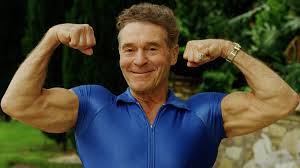
A few years before he died, Dr. Norman Vincent Peale told me about a meeting he had with the legendary strong man, Jack LaLanne. Though then in his seventies, LaLanne was still robust and strong, demonstrating great strength and endurance.  Though only a few years older, Dr. Peale’s body demonstrated the fragility more commonly associated with advanced age.

“I asked him,” Dr. Peale said, “How do you do it. How does one develop and maintain such strength?”

“The answer is simple,” LaLanne said. “You get strong by challenging your body, by exercising your muscles against increasingly heavier weight and testing yourself against increasingly greater resistance.”

“That’s when it struck me that you get mentally and spiritually strong in just the same way,” Dr. Peale said. “We get mentally tough by taking on intellectually difficult questions. We get spiritually strong through suffering and adversity.”

Pain and suffering are part of life’s refining process. They push us to the limits of what we can do and be. Whatever unwelcome fate befalls us, whatever setback we face or injury we receive, we are challenged, after the first pain and disappointment subside, to see how we can turn it into good.

Adversity introduces us to our true selves. Just as the falling of the leaves reveals the contours of the land, the strength of our character emerges when we are tested.

Posted in Inspiration | Leave a comment

Teachers

imgres-1Summer is over and the kids are heading back to school. It makes me consider my own formal education.

As I think about now, I come to the conclusion that I had a lot of instructors while I was in school, dedicated people who helped me learn things I soon forgot, but only two teachers in the true sense of the word, people who left a permanent mark on my life.

One of them was an old Philadelphia lawyer who had been seasoned by thirty years in the trenches before retiring to teach. He was near seventy, tough and demanding and unrelentingly honest.

The first day of class he asked each of us to explain why we wanted to be a lawyers.  Not knowing what else to say, I told him the truth.

I told him I believed in justice.  He told me I should reconsider.  He said that if I was looking for justice, I wouldn’t find it there.

He was right, but that is another story.

The other, Dr. James Kousolas, taught philosophy at GW.  The first class I had with him was an overview. In one semester we went from Socrates and Plato to Camus and Nietzsche.

It was a lot of material to cover in a short period of time and it left me completely confused.  We were in the middle of the Vietnam War and I was half way between being eligible for the draft and being drafted.  It was a time of doubt, distrust, and uncertainty. Everything was being questioned.

My friends and I debated the legitimacy of the war and wondered what we would do if called.  The War gave the academic questions we studied in Kousolas’ class a sense of urgency and personal relevance – What is worth dying for? What do we live for?  What is the measure of success?  How do you lead a meaningful life in a time of turmoil?

Unable to find the answers I sought in the material we studied, I voiced my confusion and found the courage to ask Dr. Kousolas for his personal opinion.

You can imagine the reaction.  Some members of my class laughed outright.  Others were embarrassed by what they saw as an obvious effort to curry favor.

Dr. Kousolas must have had his doubts as well.  He looked at me long and hard. After what seemed like forever, he stilled the class with a wave of his hand and perched on edge of his desk.

“I was sixteen with the Nazi’s came,” he said, pulling a wallet out of the breast pocket of his jacket.

“We lived in a remote village but I knew they would come for us soon.  There were only two choices: You could either surrender or you could take your rifle, go up into the mountains, and make them come looking for you.

“So, my friends and I joined the resistance.  One morning several months later we ambushed a German convey.  As I surveyed the wreckage, I saw a broken mirror on the road. I sorted through it and picked up the largest piece as a souvenir.

With this, he and took a small piece of glass out of his wallet.  It shimmered in the light as he held it up for us to see.

“The mirror was half again as big as what you see now,” he said. “It was jagged with irregular edges.  Over time, I smoothed the edges my rubbing it against rocks and shaped it to look like this.  For more than three years, I played with it in quiet moments, reflecting light into the dark places where we hid, illuminating cracks and crevices. It became something of a game.

“After the war I kept it because by then I understood it was more than a toy.  It was a metaphor for my life.  I came to understand that I am not the source of the light, but I know the light is there.  I can see it and reflect it in what I say and do.

“So, to answer your question directly, here I am.”

He held the mirror up high and pointed it directly at me.

“Like this piece of glass, I am a fragment of a mirror whose design and shape I do not know.  I know I cannot solve all the problems of the world.  What I can do is bring light into darkness.  I can reflect truth, love, and understanding into dark and doubtful places in the hearts of men and change some things in some people.

“That is why I am here. And that is why I teach.”

With that, he stood up, put the mirror back in his wallet, and dismissed the class.  He never said anything more about it, but he didn’t need to.

Whenever I am in doubt, whenever I am challenged or face a difficult situation, I remember Dr. Kousolos’ lesson and try to bring light to darkness.  It is no accident the title of my first book is Be the Light.

Tomorrow, my son begins his senior year of high school.  College is just around the corner. As I reflect on my journey and anticipate his, I can only hope and pray he is fortunate enough to find a couple of teachers to along the way.

Posted in Inspiration | 3 Comments

The Pattern of the Universe

images-1A hundred years ago, a Scottish farmer heard a cry from a swamp near his farm. When he ran to see what was happening, he found a boy stuck to his waist in the muck, struggling to set himself free. Without hesitation, the farmer extended a hand and rescued the boy from what otherwise would have been a slow and terrifying death.

The following day a fancy carriage pulled up to the Scotsman’s humble cottage. A well–dressed man stepped out and introduced himself as the nobleman who owned a nearby estate. He said he was the father of the boy the farmer had rescued and that he had come to thank and repay the farmer.

The Nobleman held out a bag of coins but the farmer immediately replied, “I can’t accept payment for what I did. It wouldn’t be right. Besides, I have a son of my own.”

At that moment as if he had been listening for his cue, the farmer’s son came to the door.

“Is that your boy?” the nobleman asked and when the farmer nodded went on to say, “Let me repay you then in this fashion. You have helped my son. Let me help yours. Let me pay for your son’s education. If he is anything like his father, he will make us all proud.”

The farmer agreed and the farmer’s son fulfilled the nobleman’s prophecy. He excelled in school and went to St. Mary’s Hospital in London to study medicine. He later earned international acclaim in the scientific community for his medical discoveries and was awarded the Nobel Prize for Medicine in l945.

Ironically, at about the same time, the son of the nobleman once more found his life in danger. This time, he was stricken with pneumonia. As he hovered on the brink of life, his physicians administered a new drug called penicillin and the boy, now a man known to the world as Winston Churchill, was again saved.

The benevolent nobleman was his father, Lord Randolph Churchill.   The farmer’s name was Fleming. His son was Sir Alexander Fleming, the discoverer of penicillin.

The patterns of the universe are not always so clear but they are always present.

The universe is one piece. No good deed is ever wasted. Causes become effects. Effects become causes. What goes out from us comes back to us in equal kind, measure, and degree.

Posted in Inspiration | 3 Comments